Home Sweet Home

Home Sweet Home

Words out.  I’m back in the states!  It’s somehow been nearly two months since I have returned from Nepal.  Writing this ‘last’ post on my fellowship has been difficult.  My fear is posting the grand finale closes a chapter to a mission I am not done with yet.  So this will NOT be the last, but will continue to be a medium as time allows and as I continue to explore  human trafficking’s global footprint.  Look for a post on a recent event I attended concerning labor trafficking in the states.

Since I have returned I have had the opportunity to share my experience in a number of different formats, each time feeling therapeutic as I get to recall some of the most rewarding and emotionally challenging moments of my life.

My first week back to work I hosted a lunch and learn where I dressed in my Nepali finest, a hot pink Kurta covered in gold sparkles. Those that know me closely in the office laughed, commenting on how it was the most feminine they have ever seen me dressed. In a way it was almost symbolic for how I felt. Out of balance and readjusting, yes, but filled with a new sense of accomplishment and satisfaction that I had not known before.

The following week I presented at our West Coast quarterly meeting, sharing my story but more importantly how human trafficking is affecting Nepal, continuing to spread awareness.

I have also posted two blogs on our West Monroe blog, The Blend.  Check them out here to read the digest of my experience:

https://blog.westmonroepartners.com/author/jennifer-schauer/

So yes friends and family, I am home safe and sound.  Thank you all for supporting my journey to Nepal, encouraging me when I felt alone and sharing the story of trafficking.  My final ask is to keep talking about what you are learned through my experience, sparking a movement to eliminate trafficking, everywhere.

A Digest of Recent Events

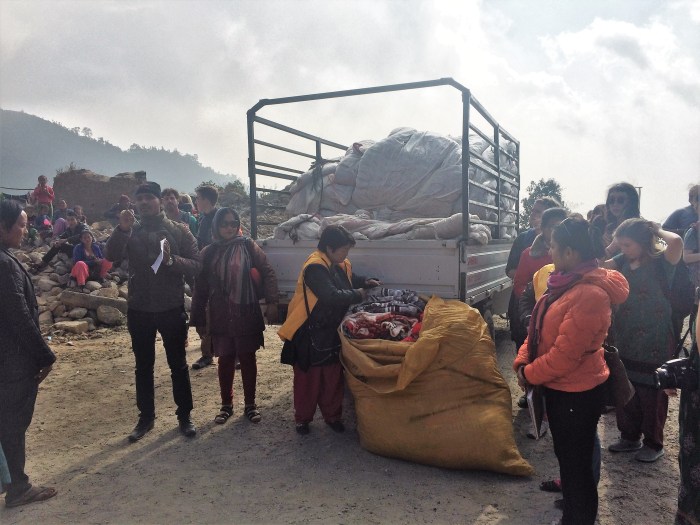
It’s been a busy month.  Two weeks ago we opened our doors to guests from America, showing them the programs here at WPC and taking them on site visits.  This included facilitating our Earthquake Relief program in the VDC of Namtar, distributing blankets to numerous earthquake victims who are currently living in temporary housing.

IMG_8081


After their departure, Ram Sir and I were ready to get to work on our program delivery.  We planned to reach the outskirts of the district this week covering three different VDC’s, Namtar, Daman, and Palung.

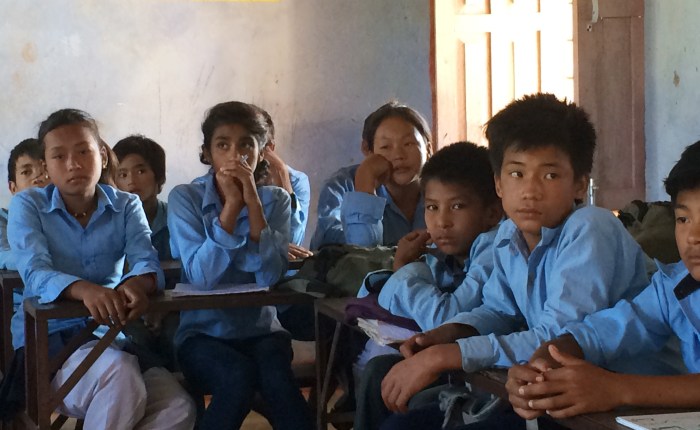
Reflecting back, I feel so full of accomplishment.  After months of preparing and piloting, our goal of educating rural children on their rights is coming to fruition. We spoke to about 100 students in grades 8 and 9 and gave them the knowledge they need to be the change in their communities.  In the process, we build relationships with 3 school districts where we could warmly return in the future. Tears are filling my eyes writing this as I know in my heart we have left a lasting impact on these students, preparing the next generation with truth and methods to protect themselves from harm. With a few schools under our belt at this point, I have made a few observations I’d like to share.

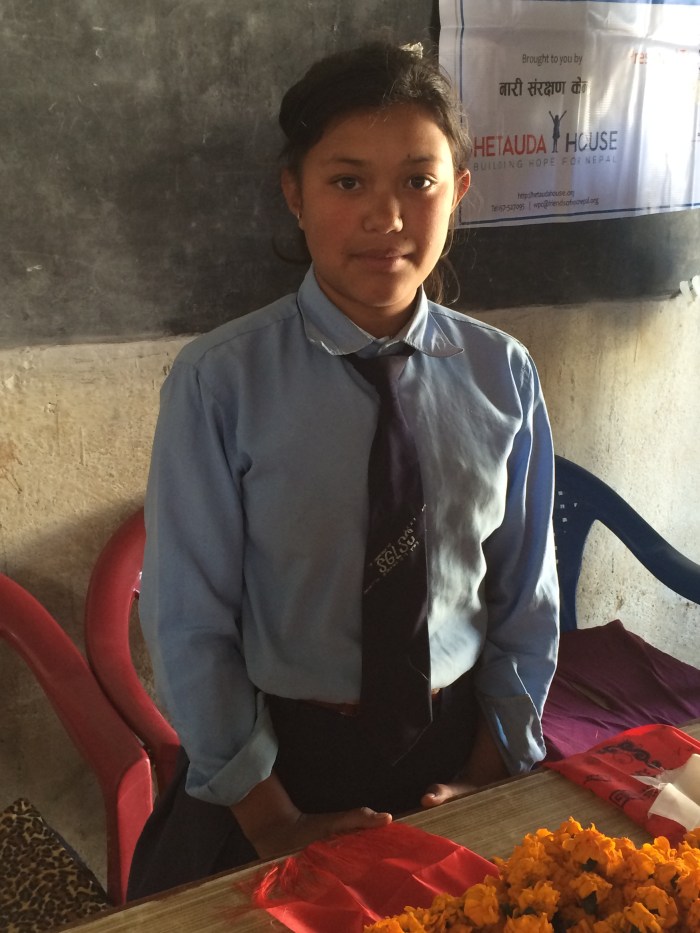
Every school has their own way of greeting guests. This past week we have been given bouquets of handpicked flowers, graciously accepted warm tea, and blessed with honorary scarves and strands of marigolds. Each school is a new surprise as they share their excitement to open their doors to guests teaching a topic that most teachers passionately support. At the school in Palung, the 8th grade student who is the President of Child’s Club set up a whole welcoming ceremony for us. As Nepali’s would say “Guests are our Gods”. I sure felt that way.

OLYMPUS DIGITAL CAMERA

IMG_8013IMG_8206


It is possible to facilitate an interactive class even though that is not Nepal’s traditional teaching style.  We were warned as we revamped our materials that students may not respond well to our attempts to have them answer questions out loud and perform brainstorming activities as typically Nepali classes use memorization as their primary learning strategy. Teacher primary goal is to have students pass state exams.  In fact, in government school 10th grade is commonly dedicated to exam preparation and is often just a supervised self-study hall. So when we added new activities and interaction to our material the explanation and warming students up was critical. It took a few tries but we found that breaking into small groups and completing activities on large pieces of paper to share with the class is great way to influence involvement.


Nepali students can sing!   As an intermission activity, our trainer surprised us by asking one or two students to perform a song or dance for the class. This has easily become my favorite part and I am so enamored by their abilities in the arts. We even had one girl tell a joke in Nepali that I felt was a good representation of the focal points of Nepali culture that goes a little something like this: A man proposed to his girlfriend and she replied in English “I love you”. Confused, the boy walked away sad and sought a friends assistance to translate.  He asked his friend, “What does ‘I love you’ mean?” In Nepali he replied “Maya garchhu”[I love you]. The boy replied, “Maya garchhu too, but what does ‘I love you’ mean?” The class was in hysterics.  I sat confused until it was translated, as usual.

IMG_8136


Being flexible and able to improvise is key. Planning has not been perfect this week, starting with day one. Our transportation was now unavailable so we had to take our motorbike (and find gas for it…). Because of this, we planned to travel three hours to the school then return home that evening, rather than carrying onward. However the ride was difficult and tiring and the temperatures were dropping so after our presentation we chose to press on, moneyless and gasless, to the next village where we planned to teach the following day. Choosing not to stress, we rode our bike in neutral and coasted our way into town, phoned a friend and wired money, and exchanged hi-fives rather than freak-outs.

In another example, the electricity went out during our presentation (and again as I type this), cutting power to our projector. Without a flinch, our facilitator spun the computer around, my coworker wrote a few questions on the board, and I sat back and smiled.  The show went on and no one blinked.


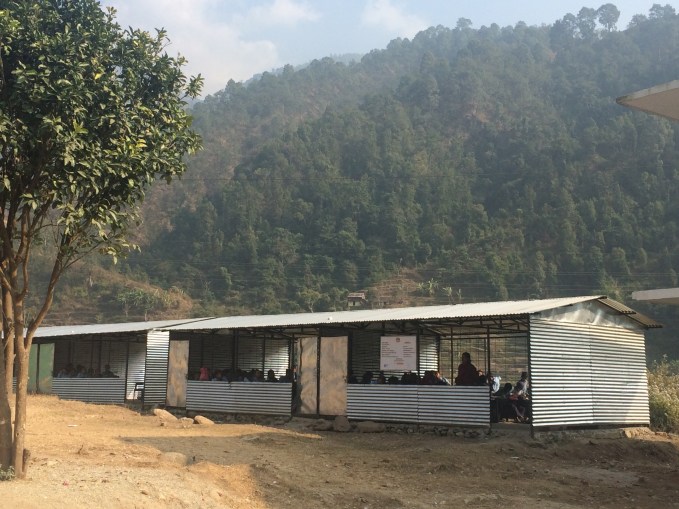
Temporary schools are frigidly cold. Many of the schools we have taught at are currently using temporary buildings.  After the earthquake hit, the Nepali Emergency Response team visited all governmental buildings and performed an inspection to determine the safety of the building.  Those considered safe were awarded a green dot and those condemned were assigned a red dot and temporary metal buildings or tent like structures were installed.  Sadly during the winter season, these structures provide no installation and often are not even equipped with an electrical line to light the room. Even while teaching our class I found difficulty focusing in the freeze temperatures and wrapped myself tightly in all the layers I had with me.  My heart went out to the students in the room, especially as most were wearing flip flops.

IMG_8024


Riding a motorbike is a blast. As our bus was unavailable, traveling to the next school required extended periods of time on the back of a bike.  Ram, Shankar and I traveled like our own bike gang up and down Nepal’s rolling hills admiring the beauty of the changing flora as we rose in elevation. We left the banana trees and jungles and climbed up to various firs and terraced farmlands carved steeply between sparse homes. Even with the wind chill, a huge grin spread across my face as I gave my eyes a mini vacation from the office walls.

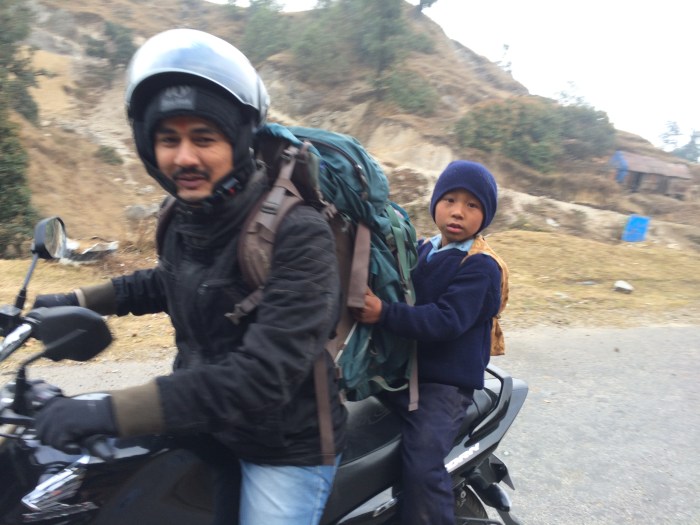
As we left a school in Namtar, we invited a young boy to accompany us on the back of the bike rather than walk home.  He, like most others from this school, was mentally preparing for a two hour walk home on the opposite side of the hill. He does this every day. When I was his age I was fighting for the back seat of the bus or waiting from my mom to pick me up from soccer practice. One time I ran home with a friend to her house after school and remember it being brag-worthy – yet that was half the distance this child was traveling.  If we had fuel all three of us would have eagerly been taking trips back and forth that evening.

IMG_8145


Thoughts heading into a new year

Every year around this time I tend to be amazed at how fast time seems to fly.  This year in particular. I’m four month into my fellowship with only 2 more to go. How has this happened so fast? Will time please slow down?

The last week or two has been spent planning my remaining time here in Nepal and reflecting on 2015.  To be frank this is my favorite time of year, specifically for the excuse to lock myself in solitude and spend quality time thinking, reflecting, planning. Some years has started with a spiral of self-pity as I pull up a failed list of goals – didn’t drop the weight, or kick the chocolate habits, or drink less, or do more or give more etc.. But this time around I found a more positive outlook during my self-reflection. Am I finally easing up on myself? Or maybe it’s maturity? Or maybe due to the complete removal of external pressures?  Regardless, the easy forgiveness of shortcomings and recognition of positive aspects to the past year has left a lightness in my soul that I wish I could pour into all of you.

Going with the theme of planning and looking forward, I’ve highlighted many of the concluding plans with the Women’s Protection Center in Nepal in my post below.  I must forewarn that this reads much like a status report [and I think part of me is missing writing them].

During the next two months, we have large goals here at WPC. With our pilot phase completed and materials reworked and finalized, we will be aggressively moving into our delivery phase. Up until this point, I have spent much of my ‘down time’ wandering the populated city of Hetauda, venturing only as far as my legs could take me.  Now we will be reaching the outskirts of the district, working in schools that can only be reached by foot and where overnight accommodations are ‘few and far between’. I’m assuming that means I won’t be collecting Starwood Points so I’m considering packing my tent and newly purchased sleeping bag (shot out to Sonam, I can’t wait to use the lightweight down 15 degree this summer).

We are coordinating with about nine schools for January and 9+ (a to be determined list) for February.  To select locations for our program, we acquired a list of all the government run secondary schools in Makwanpur back in September and built a priority list based on past relationships, geographical proximity and greatest need. The district of Makwanpur is broken up into 46 Village District Communities (VDC’s), each having at least one to two free secondary government schools. With an annual budget of about 25-30 programs a year, we easily have developed a long term plan to accomplish our goal of reaching all Makwanpur.

Thursday will be the first program that will run with our new material. I am SO excited. Can I say that again? So very excited.  Working off feedback from our pilot, we spruced up our original agenda to make time for more interaction and group discussion.  My goal is to ensure we hear the voices of the students rather than simply social preaching and hoping something sticks. This will be done through case studies, discussion questions, and brainstorming sessions. And to the West Monroe readers – we also added, believe it or not, a survey, to provide students the opportunity to share their thoughts on the program and hear additional ideas for future improvement.

Within the program there are three different stories that we profile, all from girls within our home, to describe the harms of child abuse, discrimination and child trafficking. Each story is impactful, saddening me each time I polish those particular slides. We share the story of Asha* who’s dad would beat her and burn her with cigarettes after drunkenly stumbling home from his 12 hour shift as a rickshaw driver. Pemba* who was raised to believe she was worthless and stood no chance at having a future because of the ‘untouchable caste’ she was born into. And Gita* who was approached by a family friend with promises of a better life and offered to help her obtain a visa to work abroad.  Gita’s situation perfectly highlights the power of awareness as his proposition triggered her memory from a past program she attended and ultimately protected her from unknowingly entering an agreement into sexual labor. It’s somber stories such as these that confirms each day spent here is working towards something greater, in a country that so desperately needs a light. (*Names are changed)

My remaining time spent at the office will be dedicated to creating a financial management and business basics course for our students graduating from our vocation training this February. The idea of our program is to add some additional training to teach the women about different work options, the skills involved, and basics of finance. We will also add content to cover entrepreneurism and how to start their own shop in Makwanpur.  Next week, I’m going to host a couple interviews with local women to start my research. At the completion of their six month training program, the graduating students will be asked to demonstrate their sewing craftsmanship and upon obtaining passing marks will receive a certificate of completion.  With this certificate, the women will be highly marketable and able to apply for work as a seamstress, one of the primary sources of income for Nepali women.

Certificates in Nepal are rather symbolic towards their changing society and are held in high regard, often framed like a diploma you would find in a doctor’s office.   Here, it’s a symbol for intellect and economic independence.  When applications are submitted for a new job, the applicant will submit a stack of their certificates illustrating their life’s achievements dating back to their graduation from secondary school. The pride tied to receiving a certificate is understandable when you consider that Nepali citizens have only been allowed to attend school since 1951.  Prior to the 50’s schooling was reserved only for the royal family.

Comparably, at this time in the United States, schools were about to be desegregated from the Brown vs Board of Education trials and children were reading the recently published “The Catcher and the Rye”.  The fact that Nepal is only educated to the second/third generation is apparent now more than ever as the country seems to be splitting at the seams from one crisis after another.  From an outside perspective, a lot of pressure resides on the younger generation to compensate for their populous expansion and infrastructural weaknesses. Even the basics like roads, water supply and consistent electricity are severely lacking….

Although, I must say the lack of electricity and continual supply of internet has been such a blessing.  You know when you go on vacation and bring a book or two to read? Well in this comparison, I’m basically on a six month vacation with endless books available by download (properly timed of course). Currently I’m starting a new one on building character.  My take-a-way thus far is that character is individually defined deeming it necessary to have introspective conversations to understand what define yours, reflecting on the traits you value in people you admire sprinkled with common trends influenced by societal pressures and cultural expectations. Stepping into 2016, will venture to explore what changes I need to make to live in a way that uplifts said values.  Maybe that’s what I’m doing now? We shall see.

Stopping here before this turns into a full blown journal entry. Happy 2016 Friends, Family and the Unknown.

The Art of Serving

The Art of Serving

One of the best parts about long walks is the opportunity to meet so many different people from different parts of the world. In my last post, I alluded to the fact that I met many individuals with varying nonprofit backgrounds.  One of the topics that came up time and time again was about the “art of serving”, discussing what truly is helping vs causing more harm than good when it comes to community development. Admittedly this has caused more questions than answers in my mind, however there are a few common themes that I would like to share that I believe to be true.

First, the program/project idea should be community generated.

Let me paint a picture: When traveling internationally, more often than not it is easy to identify differences from your home country. These differences could be an aspect of culture or state of developmental progress, they may be enjoyable or cause inconvenience. Whatever the situation may be they are still observable differences to a way of life you are accustomed to. For example, in my opinion, sometimes it would be nice if Nepal had better plumbing so I could  comfortably use a bathroom without standing in water or the inability to flush…  Yet my Nepali counterparts have never complained about this.  Get them talking about the electricity load shedding though, that’s another story!  The point that I am attempting to make is that it is very easy as a Westerner visiting a developing country to make quick decisions about what a community may be lacking.  By listening to the voice of a community, you can correctly identify their greatest needs and even empower their ability to change their environment in a way that is beneficial to them in their everyday life.

A prime example of a project gone wrong occurred not too far from where I am currently living.  There is a caste in Nepal that lives in the caves nearby my village who forages for food and makes small wood crafts to sell to the market place.  Due to the seemingly undeveloped community, many NGO’s have extended a hand to support them.  One of these NGO’s assessed their situation and decided what they really needed was a proper bathroom. The NGO raised funds and built a beautiful porcelain toilet in the middle of the woods and considered the project a major success.  A few months pass and the NGO conducted a community visit to see if any additional support was needed. The community thanked them for their donation and eagerly took their visitors to the site.  Upon arrival it was readily apparent that this bathroom had not been used for its intended purpose but rather turned into a shrine, with pictures of their gods covering every inch. Toilet included! When asked why they chose to use the toilet in such a manner, they responded that this was the most beautiful, clean place they had making it the perfect place for their gods to live!

A second example I heard occurred outside of Nepal, but relevant all the same.  A farming community was gifted a number of tractors to alleviate the physical hardships the men and women faced to grow crops to feed their community. During the next annual site visit, the NGO found that the farms looked about the same but the state of the communities homes had drastically improved! Apparently the community had used the tractors until they ran out of fuel and then took the tractors apart to add roofs to their homes and other creative improvements with the remaining components. Because although it was easier to plow the field with the tractor, their greater need was a proper shelter from the upcoming monsoon season.

What both of these situations have in common is that they implemented a project prior to asking the community what they need. I’ve learned that many successful NGO sponsored projects begin with a community driven workshop, where members can come together and identify areas in their life that they could use additional support in improving.  Such workshops could range anywhere from an hour to a significant amount of time based on the communities discussion with an end goal of identifying the situation and its magnitude and developing a plan together for resolution. After such workshop the NGO can assess the voices of the community and determine what can be done to support their project.

A second aspect that is important in a community development project is achieving long term sustainability. During the planning stages of a community development project, one needs to include and train local team members so the work can continue on after you head back home. Building project? Train new carpenters and architects. Educational program? Teach locals to be experts. Relating to my experience as a project manager overseeing the development of an anti-trafficking and child rights awareness program, it would be easy for me to pull material offline that I think is best, craft an implementation plan, and distribute tasks to our Program Manager to implement. Instead, I’ve tried to use my expertise to teach new skills and provide the tools needed to execute the project themselves.  This has included teaching PowerPoint classes and excel tips and tricks, correcting English mistakes in development plans, demonstrating a “white boarding” session and facilitating brainstorming meetings as well as providing my own suggestions and ideas for discussion. My goal is to leave the team with a flawless program that can be implemented in the remaining schools of Makwanpur long after I’ve returned home to my Western style bathroom.

Many books have been written on this topic over the past decade, a few of which I’m eagerly adding to my kindle to continue to education myself on this topic (after completing Aziz Ansari’s Modern Romance). In the meantime, I’ve so appreciated the emails and comments that I have received to date on my posts!  I’d love to hear your opinion on this topic and any similar situations you have come across within your experience.

My Great Himalayan Adventure

My Great Himalayan Adventure

The past few weeks I sent off on an adventure to explore a more well-known beauty of Nepal, the Himalayas. What started as an opportunity to get out and stretch my legs resulted in a Masters in Humanities from discussions on various social issues, endless international development success stories, and an opportunity to live alongside another one of Nepal’s many castes. The trek I completed is called The Three Passes, exploring routes East and West of Mt Everest (Sagarmatha) with views of Lhotse, Ama Dablam, Cho Oyu, and countless 6000-7000m peaks, making it impossible to move faster than a snail’s pace.IMG_6555

I spent the first handful of days traveling with a group targeting a “trekking peak” called Imje Tse, or Island Peak. From a mountaineering perspective, it was a fairly straight forward approach. From basecamp, you can push for the summit in a single shot taking about 12 hours from bc to bc. The glaciated section is short, requiring roping in only momentarily before hitting the fixed lines.  The last bit includes the use of an ascender to help you scale a 300′ ice wall before walking the summit’s knife-edge. At the top you are standing over 6000m, or 20,000ft. My highest point to date! My group was all in good health, moving rather quickly whereas I lagged on trying to trick myself into thinking it was easy and pretending there was red wine at the top. I was glad to have a friend behind me so I couldn’t hid behind a rock and pretend I had also summited.  “You guys didn’t see me at the top? Hmm, strange, the altitude must be messing with you!”. They say you intake about 47% of oxygen at that elevation.  Not sure who they is, but I’d believe it. Lifting a leg was hard. Maybe taking Diamox would have been a good idea…

I parted ways with my friends in Chukkung, taking a rest day before beginning the second half of my journey and them theirs. After a full day of much needed laundry, sketching, reading, and basking in the sun I was off to explore a route called the Three Passes. What a bucket worthy trip it was! The route goes over three passes above 5400m called Kongma La, Cho La, and Renjo La. With each pass comes a new set of mountain views and small villages ahead. Kongma La tends to be the hardest, however after completing Island Peak I felt like a rockstar. My body was fully acclimatized allowing me to fly past the other groups with plenty of time to spare in Lobuche. That was the only time I traveled solo for the rest of my “solo trek”.IMG_6752
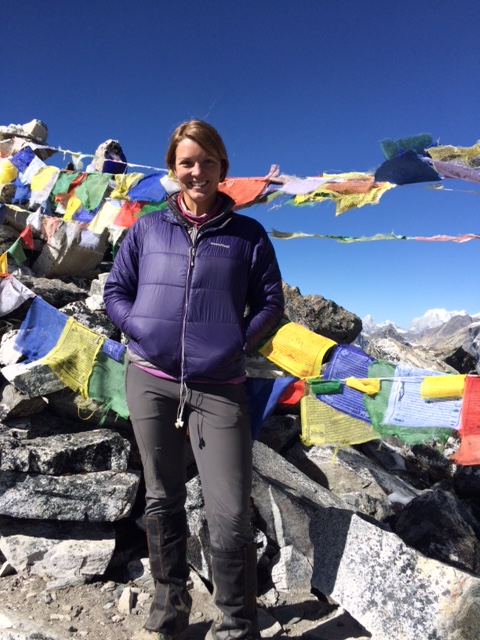
From Lobuche I traveled North to Gorak Shep and quickly moved on to Everest Basecamp and Kala Patthar.  Gorak Shep was the only time on the trek I felt slightly uneasy drinking the water as it was a very distinctly brown color. Nevertheless I remained healthy with the exception of what was nicknamed “The Khumbu Cough” experienced by all trekkers due to elevation and the inhalation of yak dung from the trails and fires alike.

Overall Everest Base Camp was slightly underwhelming.  Had it not been for the experience to walk in my father’s footsteps, and my Nepali led “shortcut” I might say disappointing in comparison to the journey thus far. The route from Namche Bazar straight up to EBC is the most traveled section of this hike so  you simply following in line with numerous other large parties of tourists for your chance to take photos on the glacier. I can only image the masses of travelers during a season uninterrupted by earthquakes, governmental crisis and travel warnings. At EBC myself and avid mountaineering book readers carefully studied the features that have been described to us many times before setting off for Kala Patther for a view of ‘ze beast (Everest) at sunset.  The friends I was traveling with at the time led us up a “shortcut” aka scenic route passing through Pumo Ri Basecamp, numerous alpine lakes, and up and down seemingly endless rolling skree hills until we reached a previously traveled trail. The remoteness of the route and view up there so worth the extra couple of hours.  The wind picked up quite a bit making me thankful for my down jacket and gloves. We spent the night laughing over a Nepali card game and vowing to never follow Krishna’s short cuts again.

IMG_2311

From Gorak Shep I took a less traveled route East running into another solo female traveler who offered me warm tea and a bite of her pancake.  What a blessing as it was as it was at that the time that I realized my funds were likely to run out before making it back to the nearest ATM, about a 3 to 5 days walk depending on my desperation. I passed by the most spectacular lake on the way to Dzongla for the night eating up some time as I tried to photograph the way the blue water mixed with the dusty trail and was encapsulated with high Himalayan peaks. (Check out the picture on my Instagram!) After arriving in Dzongla, I followed an Alaskan family I met on the trail into a nearby guest house promising a warm room and the best dal bhat.  Most guest houses this season have been modestly filled with plenty of room by the fire and peace to read if you like.  Not this place! I silently watched hot water bottles exploding, Israelis and New Yorkers bickering, planned helicopters recuses due to rock fall, you name it!  At nightfall I quickly escaped to my room, eagerly awaiting daylight to approach the second big pass.

Cho La Pass proved more difficult than the first.  There was a slight scramble section at the beginning and a good amount of packed snow/ice crossing. Nothing dangerous, just made travel a bit slower. As usual, reaching the top was breath taking, both visually and physically! There were new mountains ahead and endless trails behind.  After leaving the top, I found myself caught up in conversation with a few fellow travelers making me oblivious to the much discussed steep descent.  After some time I plugged into the latest Beat Connection album and danced my way downhill alongside a waterfall to meet a few others for lunch. Over tea and fried noodles (Well they ate, and I had one of my snickers bars since funds were  short…) I couldn’t help but laugh over the fact that I found myself sitting surrounded by the sound of waterfalls with 6 bearded dudes. That town mine as well have been named Heaven.

IMG_6497

Crossing the glacier to reach Goyko that afternoon was an adventure to say the least.  The lower part of the glaciers are unlike anything I have seen before. The glaciated ice is completely covered with mixed rock, both large moving boulders and small ball bearing style stones forming these massive waves of Earth. The route was overly marked in ranging directions making the trail navigable but difficult to discern whether you chose the correct path or not. Luckily we did and reached Goyko about two hours later.
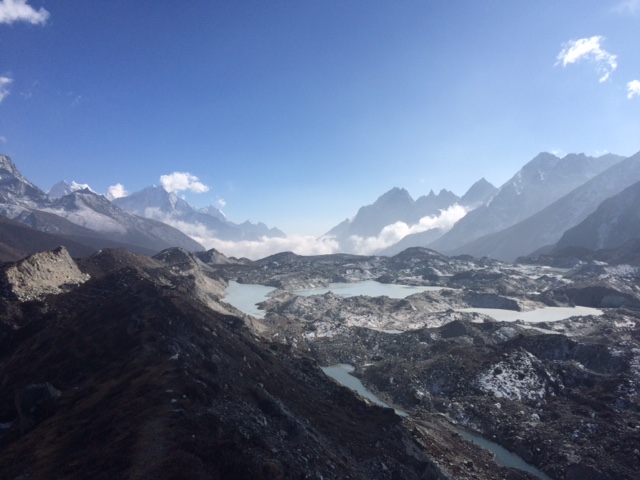
IMG_6971.JPG

Oh Goyko, what a place. I had planned to spend some recovery time here once I arrived but didn’t realize how much time that would end up being. It’s beauty (and bakery) really suck you in! The group I was traveling with that day all ended up staying at Namaste Lodge resulting in our own little commune. Lots of cards. Some enjoyed a Nepali liquor called Roxy (sp?). We even were there to witness the installation of a satellite dish and as a result watched Mission Impossible, hemming and hawing as an international crew of mishaps each time Tom Cruise took his shirt off. While I was there I took a side trip north to Cho Oyu Basecamp, about 4 hours from Goyko. I came across a solo backpacker carrying his own tent. As he pitched it besides silent lakes beneath Cho Oyu and the surrounding peaks leading into Tibet I envied the stillness he had found and knew it was time for me to move on.

IMG_7163

Leaving Gokyo you travel up over the third pass, Renjo La. This view spot provides the best view of Mt Everest that I had seen to date! Simply jaw dropping. Sadly down the next pass led to the end of it all, dropping a 1000m in elevation over the next day or two depending on how motivated you are to carry on to the real world.IMG_7188

Our next stop was Thame.  Thame was a village I had originally overlooked on the map. The town was quite large in comparison to most other villages and was filled with evidence of the Buddhist influence on the region. We stayed at a guest house high on the hill overlooking the town just beneath the monastery currently home to the reincarnated Lama. While visiting the monastery, my Nepali skills came in handy when I realized the monk was describing the sickness of the lama and asked for medical help. We were ushered upstairs into the living corridors of Lama where my friend I was traveling with performed a basic examination, an encounter one would never expect to have at such a secretive place.  Their home was amazing empty, with the exception of the single room that was utilized as the bed room. This room was decorated lavishly, much like a monastery, with the addition of Pringles and an iPad.
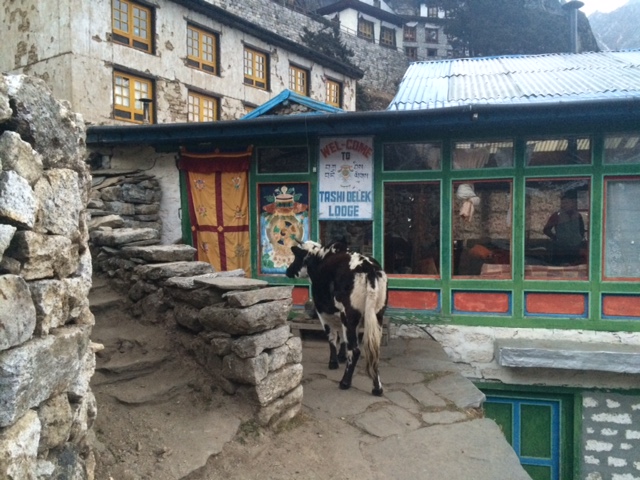
IMG_7356

From Thame we made it back to Namche Bazar and feasted on chocolate cake before preparing for a long day back to Lukla. The place we were at draws you in with classic American hits from Rolling Stones and Tom Petty. The perfect reintroduction to society.

The last day of the trek was bittersweet. During the day we I passed by many friends I had met along the way. Yet most of the walk was done in silence, remorsefully looking back as the size of the mountains diminished.   Back up at the Tara Lodge near the airport I joined a celebratory party filled with guests and their guides who had recently completed a variety of treks and peaks.  One of the guides there had summited Everest 19 times and was telling stories of his adventures.  On the other side of the lodge a full-fledged dance party had erupted including about 20 Germans and Nepalis. I watched for a while, then could not resist joining in. It was the perfect closing to a perfect month before returning to the crisis stricken reality of Nepal. My fingers remained crossed as we departed Lukla airport that buses were still running back to the village. Even from the airplane the lines of petrol cans were visible from the airplane as we approached the valley.

During the trek I heard about the Great Himalayan challenge, spreading across the country and exploring different sections of the range.  Consider 1 of 3 sukayko!

The October Update

The October Update

I’ve been here over a month!  Boy time flies… This past week WPC had a very successful launch of our first awareness program.  It was thrilling to see the program come together so quickly.  We decided to partner with a local facilitator 20151007_080954336_iOSwho has experience teaching child rights.  After quickly finding a projector, printing a banner, and some crafty PowerPoint work, we were ready to pilot our first program.  We covered a number of topics including our basic needs, harms caused against children, and ways to protect themselves from the harms that children face such as trafficking, starvation, disease, and harmful religious traditions.
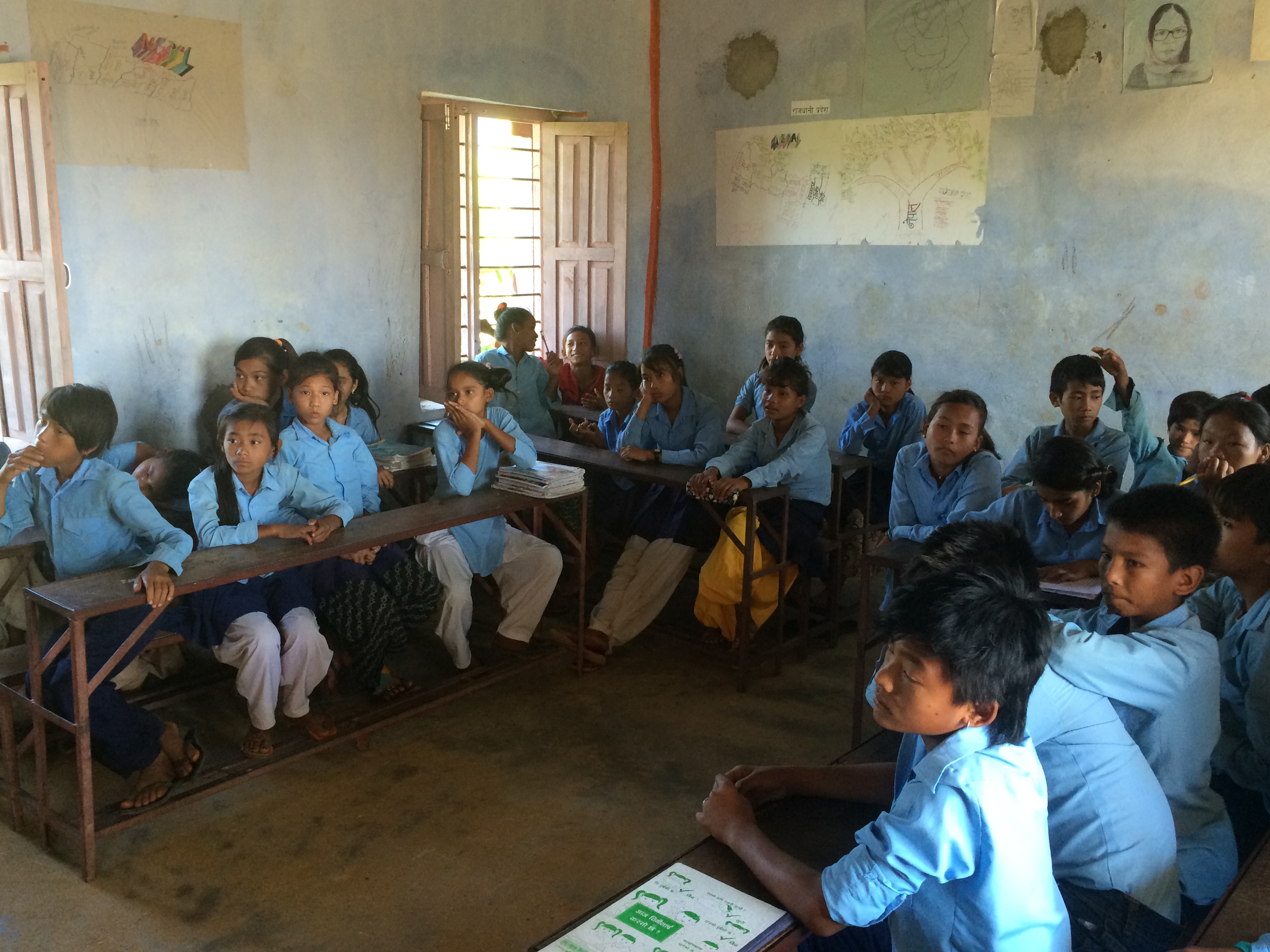
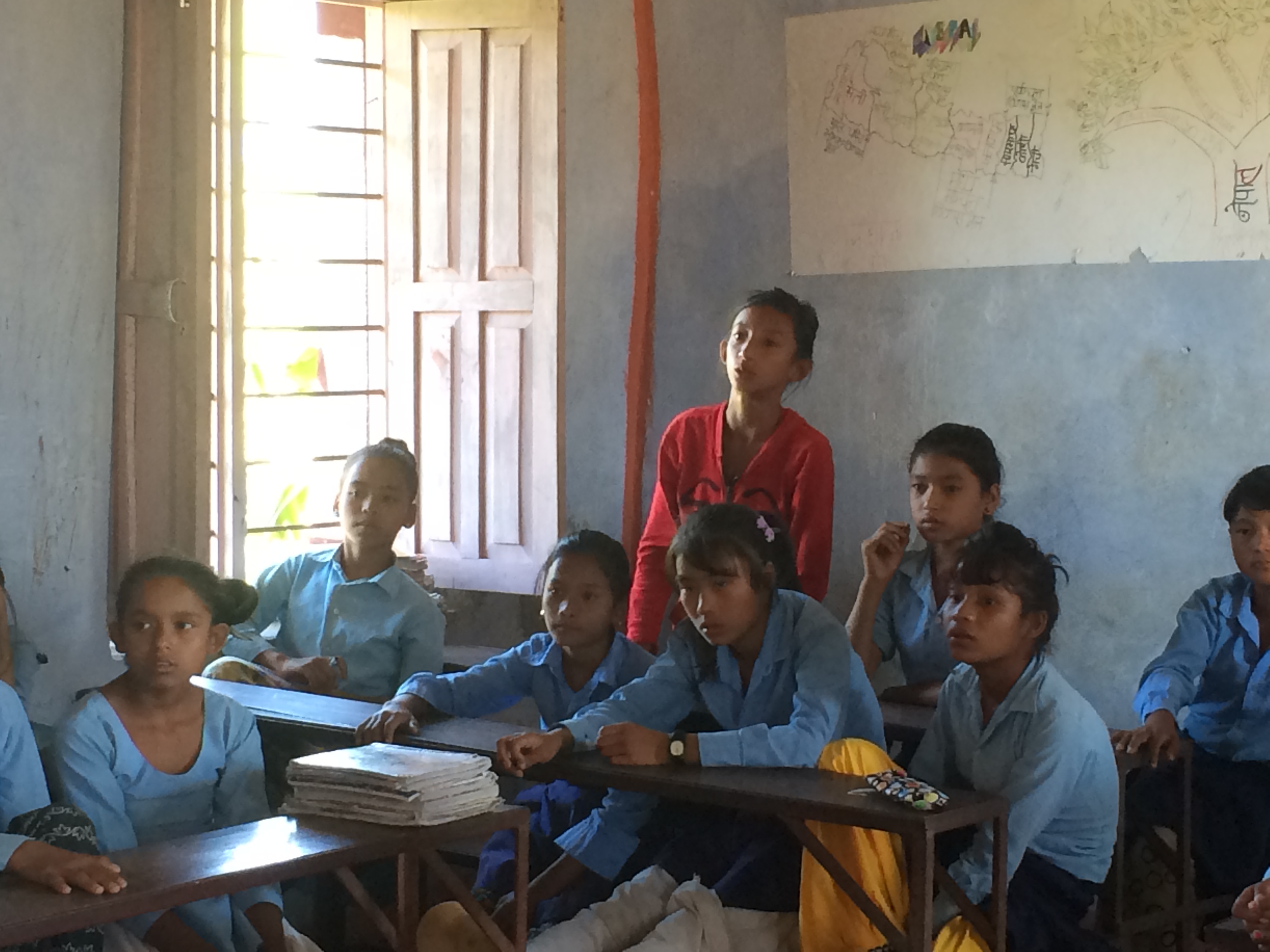
For the most part the class responded positively.  The students were engaged, asking questions, responding to the facilitators inquires, and volunteering information.

20151007_081535055_iOS  20151007_072551283_iOS

20151007_071012834_iOS 20151007_062535580_iOS

When I arrived the girls greeted me with flowers:

20151007_050423434_iOS

After the three hour program we sponsored kaja (snack) for the students from a ‘local restaurant’. Nepalese love Ramen Noodles, or Snacky Noodles as they are called here, loaded with handfuls of hot peppers. I’ve found my taste buds are not only adjusting but craving spicy. This morning I tossed my attempt at eating oatmeal for a heavily masala-ed plate of rice. Mitosa!

20151007_085215423_iOS 20151007_042144731_iOS

With our first program complete, there are some changes I’m hoping to make to the material going forward to add additional focus on human trafficking risks.  We are planning to resume our program after the festivals, presenting to 7 schools, rather than our originally intended 3.


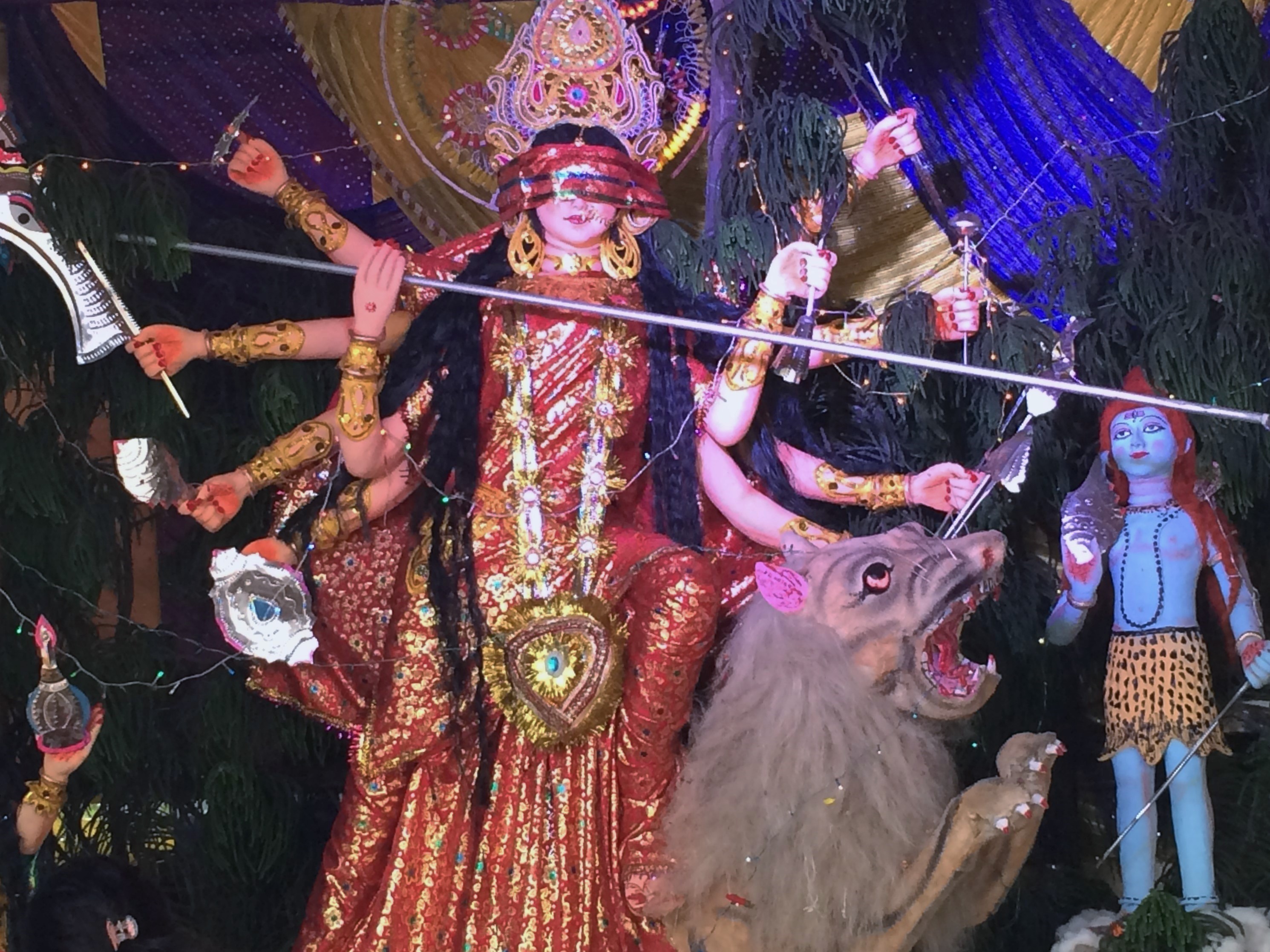
This week started Nepal’s largest Hindu festival called Dashain.  Dashain is the celebration of a Hindu Goddess, Durga, and her victory over a treacherous demon who threatened to take over Devaloka, the home of the gods.  To celebrate, most temples in Hetauda are filled with special reenactments of the battle, adorned with gold and other ornaments.  During the 10 day celebration, Hindu’s and Christians alike use the time to visit with family and enjoy a break from school and work.  Sadly this year has led to mild
disappointment as many people have 20151016_010434499_iOSfound it difficult, if not impossible, to travel due to the fuel shortage.
20151016_012600211_iOS

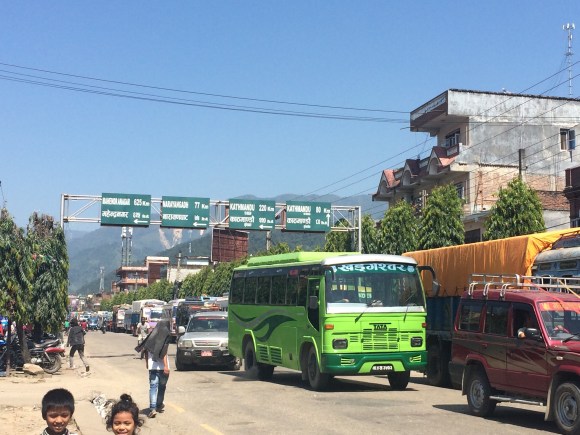
The fuel shortage is just one of the effects we are feeling due to the border blockades and Tarai protests.  There has also been a shortage of imported goods resulting in an uptick in cost of goods, some commodities doubling in price. Many restaurants are only open during peak hours and have set up wood stoves in the back due to the lack of cooking gas. People are seen stockpiling goods and siphoning gas all along the streets.  I’ll hopefully be traveling to Kathmandu at the end of the month and will be able to confirm the current state of the capitol at that time.  From what I hear the issue is much worse, magnified by the higher population and lack of local agriculture.


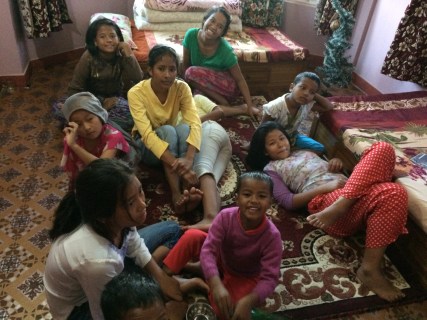
Yesterday I had the girls who are staying during the holidays over to watch The Little Mermaid and enjoy some tasty popcorn and chiya. Such a classic. 20151016_093830415_iOSAfter Ariel traded her fins for feet, I started a typing class to teach the girls how to type “like an American” – fast without looking. After about an hour all the girls could successfully type home row without looking at their fingers or making mistakes!  Impressive!
Next week the office is on holiday.  I will be attending a conference with topics completely unbeknownst to me. Should be interesting.

A piece on transportation

A piece on transportation

This week my coworker and I went to a local village school to meet with the principal and head teacher to prepare for our child rights and trafficking awareness program next week.  The school is located up on top of the hill surrounding Hetauda and made for an interesting motorcycle experience, my first time on aimage motorcycle in fact. During attempt 1, we started up a road that was fairly washed out with large divots and boulders.  To ease his navigational difficulties, I offered to walk and meet him at the top.  I took off, moving quickly, laughing at my punishment for skipping my morning walk.  After about 30 sweat dripping minutes I arrived only to receive a phone call confirming the bike was in fact stuck and I needed to head back down.   The rest of the afternoon turned into a team building exercise to escape the hole the bike  was in and ride back down to safety.
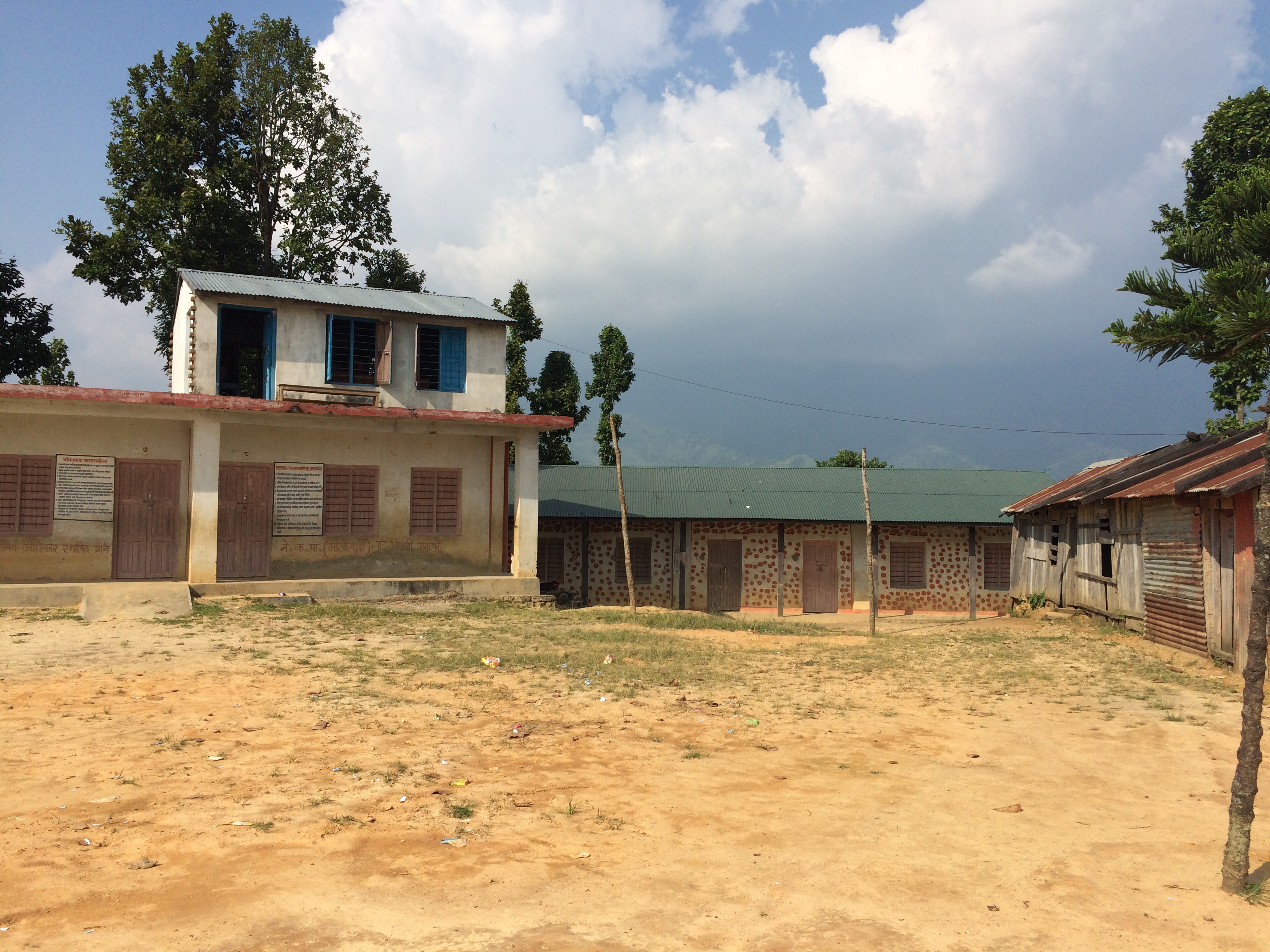
The following day went more smoothly.  We made it safely to the school to find the principal, teachers, and other local NGO affiliates were in the middle of a meeting.  Joining them, we were able to directly speak to our program proposal and introduce the idea of child rights.  Although the discussion was in Nepali, I was able to understand bits and pieces before receiving an overview in English afterwards.  We were saddened to find that the school was currently sponsoring a whole list of kids that could not afford to pay for classes, or even a pen, many of the children would arrive unfed slowing their ability to perform in class, and 14 of the children don’t have parents and are either being taken care of by older siblings or neighbors.  How do you teach children about their right to freedom when they can’t afford their basic needs? We hired a professional facilitator to take lead of the session so hopefully he will help me understand as well.

image

(The school were we will be teaching.)

image

(The view from the school.  Not too bad!)

image

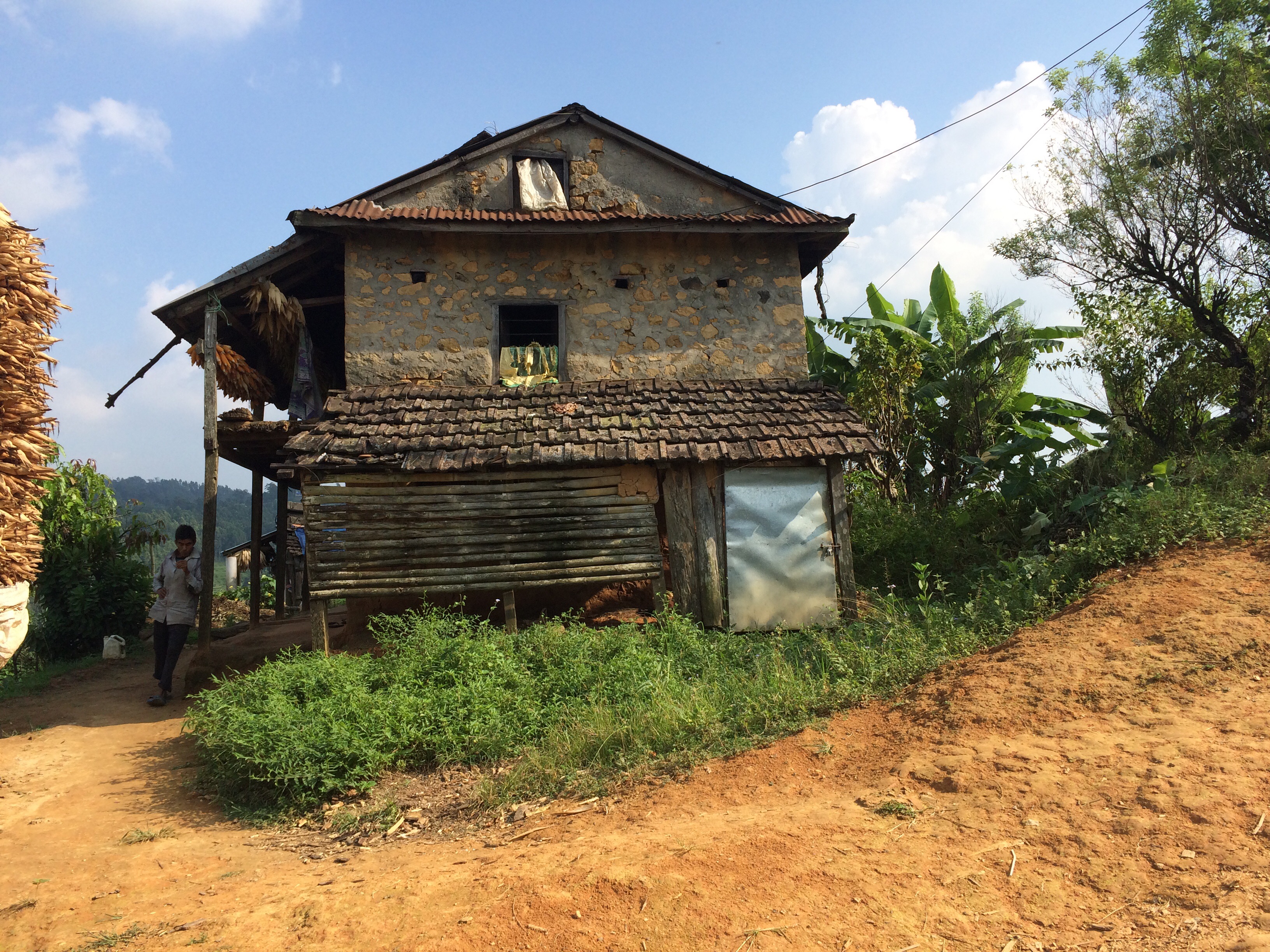
(Local home of a student)

—–

Last week I shared some insight on the implementation of the new constitution.  Quick follow up on that matter – over the last week the two frustrated parties (Tarai and India) have quickly escalated their concerns through border blockades. As a landlocked country, the primary method of bringing in goods is through the Indian border, the alternative is through China which is still blocked as aftermath of the earthquake. The Tarai are responsible for all access in and out of the country from India, so in rebellion, they mutually have caused havoc to Nepal’s ability to import supplies. As a result, this week prices for simple commodities such as spices, fabrics, sugar etc. have increased significantly. The largest concern however is oil.  Nearly all of Nepal’s oil comes from India on tankers, which are currently lined up for miles at the border, very slowly making it past customs.image

I read about the lack of oil for a few days and then started noticing trucks parked all along the roads of Hetauda.  Yesterday, I walked past the only gas station that I know of here to find a line as far as the eye could see, hoping for their turn to fill up.  This concerns me as one of the primary means for income in the city is to work as a driver (whether bus, taxi, micro, or transporting goods). Definitely not what an already impoverished stricken country needs to experience.

——

On a lighter note, last week we celebrated world heart day at the home by creating paper hearts for each of the children with a fact about your heart, heart disease or how to keep your heart healthy.  It paired as an opportunity to not only teach the children best practices for keeping their heat healthy but also an opportunity to practice English.  Double whammy!  It reminded me of the Jump Rope for Heart Days…

image

Today I got the chance to Skype with some of my beautiful friends all dressed up in Roman attire in celebration of a 30th birthday.  Cheers to you all.  Thanks for filling my day with a giant smile.

Finding a New Routine

After two weeks in Hetauda, I am slowly starting to feel settled at the safe home and have started developing a routine that goes a little something like this:

  • 5:30 – Workout
  • 6:45 – Help children with HW
  • 7:00 – Nepali Class
  • 8:45 – Dhal Bat lunch
  • 9:00 – Chiya/newspaper until the staff meeting
  • 10:00 – Work, work, work
  • 12:00 – Chiya Break
  • 1:00 – Snack Break
  • 3:00 – Chiya Break
  • 4:30 – Help children with HW
  • 6:00 – Dance Class
  • 7:30 – Dinner with my WPC Family
  • 8:00 – Practicing Nepali with the children
  • 8:30 – Back home, reading, and getting ready for bed

The blazing heat forces slowness during the day and as a result a network of early raisers. Each morning I and many predominately male Nepali’s awake and rush to the streets for a morning walk. At first, being the sole jogger causes endless stares, questions, and confused expressions. However after about a week I noticed an uptake in people’s pace, a few fellow joggers, and even a handful of solo lady walkers! Yesterday, one lady even started to join me in broken English stating “I’m running!”. Whether she knew it after our short stretch together or not, it totally made my day.

Women play an important role in Nepalese society from what I have observed today. Professionally most families rely on the income from both parents to feed and educate their families. Common shops [pasels] constructed out of a corner of a home [ghar] is typically operated by women [aimie] and men [manis] alike. You will also see many women selling homemade food [khana] on various street corners. Clothing [luga] plays such a large role in their society, an opportunity frequently utilized is to work independently as a seamstress for an additional source of income. Despite allowing women to work, they still operate under medieval expectations of women. For example, I missed a dance class one night and a friend asked me the following evening if I was too tied up in the kitchen [vanchha] to go. During most introductions, the 3rd question I receive is “are you married?” followed by utter confusion and clear concern when I say no [chhana]. There is also an expectations for women to be accompanied by a male once the sun goes down, which eliminates my freedom after 6 pm. Even typing this I am kindly reminded not to sit [basnu] outside for fear of “boys” [kaeta]. I feel grateful to experience these differences first hand, and also sweet relief that it won’t last forever.

And yes you heard me correctly – I joined a dance class. Despite preconceptions that I would become a yogi over the 6 months that I am here, I quickly learned that yoga is practiced solely amongst a particular Hindu sect if you are outside of the Kathmandu tourist district. Instead, dance is a huge part of modern culture. The safe home children are often singing a traditional Nepali song and begging me to record their latest dance moves. Music videos are playing in stores. Everywhere you go you hear a Nepali song playing from somewhere. The class I am in is similar to Zumba for the dancing newbies, backed by the latest local pop music and on a lucky day, Bey. *Confession* I like to show up early to watch the stellar dance moves in the advanced class and then secretly copy them in the privacy of my room later.

The team I work with is so spectacular it makes the day fly by. Most of the day is spent in discussion, over tea [chiya], or in the open office environment. The level of collaboration is necessary, especially when all work that is performed comes second to the 30+ children living in the home. Because of this, our daily meetings largely focus on the wellbeing of each child, followed by administrative updates. So far I have continued to spend a good percent of my time helping with technology related things as I mentioned before. Last week I helped them set up corporate email accounts to create a more professional means of communicating when email is deemed necessary. A few days ago I was able to demonstrate my PowerPoint skills (thank you WMP) and ability to develop planning materials for our awareness program implementation. Over the next couple of months, my focus will be to help develop content and participate in the deliverance of a program that advocates against human trafficking in schools throughout Makwanur.

When I arrived in Nepal, my expectation was that the population is fairly ignorant on the topic of trafficking, but instead I have found that this topic is discussed almost daily in the news and there are a wide array of NGO’s with missions aligning to WPC. Articles cast light on traffickers that have been caught and women rescued. There are a few governmental programs in place to help prevent such as strict border guards and free counseling sessions. The trouble is spreading the awareness of the issue and availability of services to the more remote villages who are without TV, radio and often newspapers.

One of the sources of trafficking resides in the fact there are simply not enough job opportunities in Nepal so it is very common for Nepalese people to apply for international positions through various organizations. Many of these organizations are honest, providing people with great opportunities to make more money for their families. The trouble is it opens the door for traffickers, or brokers, to easily mislead individuals (mostly women) looking for work and need help figuring out the application process. In order to work abroad you first need to apply for a visa and pay a fee. Like most systems in Nepal the paperwork is intensive and difficult to navigate, even when you go through an organization that helps with the process. That is why when offered an opportunity to speed up the visa process and a promise of an allotted amount (usually in USD), it is hard to turn the offer down. Yesterday the government expressed the need to crack down and investigate organizations that provide abroad job opportunities, but similarly to the constitution, it’s great to talk but let’s see it put in action. Our goal with the program is not to necessarily discourage working abroad, but rather provide knowledge to the risks that are involved and tools to do so properly. Last week our team got energized [shakti] about different fundraising opportunities and ways to spread awareness throughout our community, so look forward to hearing more about that in the near term.

That’s all she wrote folks. Enjoy your Sunday.

Let’s Talk About Politics

Let’s Talk About Politics

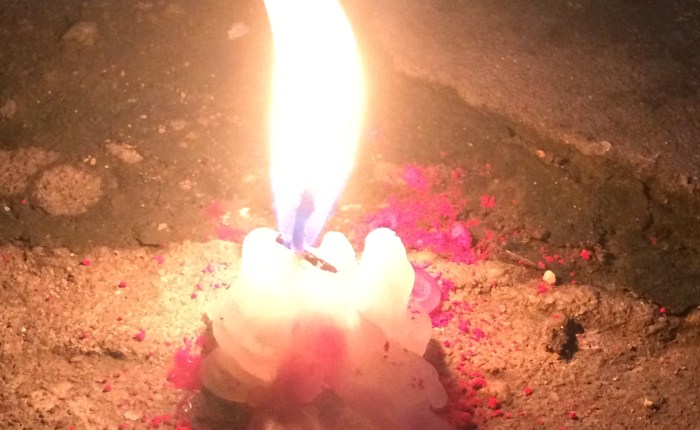
Lightly covered in the US news, Nepal experienced a monumental moment in their history yesterday. After many years of development and revisions, Nepal has finalized a constitution, the first one in place since discussions began in 2006. The majority of Nepal is in support of the new legislature and welcome the change. The streets were filled with people singing, dancing, and lighting candles to demonstrate their support.

20150920_141047071_iOS.        20150920_142718060_iOS

To accompany this event, I’ve provided a quick history lesson (hopefully depicted accurately) cultivated through conversations, local news and online research:

In the mid 90’s, a rebel group known as the Maoist formed in the jungle of Nepal and was slowly gaining followers through force and aggression. This group is considered a communist organization and was feared throughout Nepal. I was told a story where the Maoist would come into a remote village and basically tell residents that they had to convert to Maoist or die. As the Maoist gained power, they slowly infiltrated the political parties and initiated a 10 year civil war.

On June 1st, 2001, Nepal experienced a national tragedy. Price Dipendra murdered his entire royal family, in an event called The Nepalese Royal Massacre. Although this event was documented as a family dispute, many locals and undocumented opinions will share this the Maoist group was behind this event. For the next 5 years, Nepal was ruled by the kings remaining brother, Gayendra, who made a political mess of things. During this time the parliament was dissolved, claiming they were incapable of handling the Maoist rebels. As a result, 3 different political parties formed with hopes of establishing power for the people, eliminating the martial law currently in place. This included the Maoist, Communist Party of Nepal, and the Nepali Congress. In 2008 the three parties successfully abolished the monarchy and established a federal republic, led by a president and prime minister.

The frequent governmental upheavals has left the country govern-less, individually abiding by the rules of their diverse religions rather than a centralized government. The is a saying that goes “this is Nepal, I do whatever I like”. The political leaders and Brahmin caste have complete control of judicial decisions, leaving the people with little to no control of their judicial fate.

This brings us back to the constitution.

So since 2006, the three political parties have been working side by side to come up with an agreement that provides power to the people and moves towards a federation and democratic governmental rule. Despite some hesitations that I will get to next, the agreement that is now in affect includes numerous progressive steps in the right direction, and as the current (now retired) president explains, can be amended with 2/3’s majority rule. With a constitution in place, simple legislature that we take for granted, are now defined, like terms of citizenship and core freedoms. It also defines governmental structure and processes.

The major change is the creation of 7 states, separating Nepal into geographic regions with providence specific governmental power. In addition, the constitution stresses inclusion despite diversity, and provides the following freedom of opinion and expression, of assembly peacefully and without arms, to form political parties, unions, and associations, to move freely amongst Nepal, and to partake in any organization. It also defines citizenship, provides women equal parental rights, the right for a lawyer, outlaws torture and detention, etc. etc. etc. There are also a few articles included related to my mission in Nepal:

  • Article 34. Rights against exploitation:
    • (1) Each person shall have the right against exploitation.
    • (2) No person shall be subjected to any kind of exploitation on the basis of religion, custom, tradition, culture, practices or any other bases.
    • (3) No person shall be subjected to human trafficking or bonded labour, and such an act shall be punishable by law.
    • (4) No person shall be subjected to forced labour. Provided that nothing in this sub-clause shall prevent the enactment of a law requiring citizens to be engaged in compulsory service for public purposes.
    • (5) Any act contrary to sub-clause (3) and (4) shall be punishable by law and the victim of such an act shall have the right to appropriate compensation from the perpetrator.
  • Article 36. Rights regarding education:
    • (1) Every citizen shall have the right to access to basic education.
    • (2) Each citizen shall have the right to compulsory and free basic education, and free education up to the secondary level.
    • (3) The physically impaired and citizens who are economically very poor shall have the right to free higher education as provided for in law.
    • (4) The visually impaired shall have the right to free education with the medium of brail script. Citizens with hearing impairment and speech impairment shall have the right to free education with the use of sign language.
    • (5) Every Nepali community living in Nepal shall have the right to acquire education in its mother tongue up to the secondary level, and the right to open and run schools and educational institutions as provided for by law.
  • 43. Right of women:
    • (1) Every woman shall have equal right to lineage without any gender discriminations.
    • (2) Each woman shall have the right to safe motherhood and reproductive health, and infanticide on the basis of identity of gender shall be punishable by law.
    • (3) There shall not be any physical, mental, sexual or psychological or any other kind of violence against women, or any kind of oppression based on religious, social and cultural tradition, and other practices. Such an act shall be punishable by law and the victim shall have the right to be compensation as provided for in law.
    • (4) Women shall have the right to access participate in all state structures and bodies on the basis of the principle of proportional inclusion.
    • (5) Women shall have the right to special opportunity in the spheres of education, health, employment and social security on the basis of positive discrimination.
    • (6) Both the spouses shall have equal rights in property and family affairs
  • 44. Rights of children:
    • (1) Each child shall have the right to his/her identity with the family name, and birth registration.
    • (2) Every child shall have the right to education, health care nurturing, appropriate upbringing, sports, recreation and personality development from family and the State.
    • (3) Every child shall have the right to formative child development, and child participation.
    • (4) No child shall be employed in factories, mines, or in any other hazardous works.
    • (5) No child shall be subjected to child marriage, illegal trafficking, kidnapping, or being held hostage.
    • (6) No child shall be subjected to recruitment or any kind of use in the army, police or armed groups, neglected, or used immorally, or abused physically, mentally, or sexually, or exploited through any other means, in the name of religious or cultural practices.
    • (7) No child shall be subjected to physical, mental, or any other forms of torture at home, in school, or in any other places or situations.
    • (8) Every child shall have the right to child friendly justice.
    • (9) Children who are helpless, orphaned, physically impaired, victims of conflict and vulnerable, shall have the right to special protection and facilities from the State.
    • (10) Any act contrary to Clause (4), (5), (6) and (7) shall be punishable by law, and children who have suffered from such an act shall have the right to be compensated by the perpetrator as provided for in law.

I have observed that the US news has mostly focused on the negative aspects of the constitution. Yes, there are certain minority groups that are very much against the constitution and do not feel that they are adequately represented, particularly when it comes to the electoral college representation of the more remote states. There is also a general concern that there is no clear implementation plan and are unsure what next steps will be taken to execute changes like expanding free education. Personally, I feel that this was a step towards resolving one of Nepal’s primary issues, lack of political definition. With the new constitution in place, men, women, and children of all castes, ethnicities, sexual orientation, and religion are protected alike, providing ground rules that are ready for future expansion.

Over the next month, political elections will occur. In the new government, the previous president and prime minister will step down, making space for The Federal Democratic Republic of Nepal to start fresh. The president will be elected to a 5 year term by the voting members of the federal parliament. Unlike the US, only members can vote. Speculation has guessed that the leader of the Maoist party, Pushpa Kamal Dahal will be elected, granting him control of the Nepali army. Despite the Maoist violent history, hope remains that the future constitution will lead Nepal towards equality amongst its diverse nation.

One of the things I have enjoyed so far is having time to read the morning Himalayan Times, delivered directly to the safe home with my morning Chiya. This topic has been heavily covered and I’m sure will remain front page news has reactions to the recent formalization and implementation of the constitution. Looking forward to what happens next…20150921_025438168_iOS


Hetauda, I’ve Arrived

Last Sunday we traveled from Kathmandu to Hetauda, where I will be living for the remainder of my time Nepal. Upon arriving at the safe home I was greeted with a warm welcome. The Safe Home family was eagerly awaiting on the steps with a prayer scarf in hand. Quickly I met the house parents, administrative team, and Dipa, the co-founder of WPC Nepal. I was overtaken by their joy and energy. After introductions and chiya (tea), a few of the older girls took me to our apartment to get settled.

When we walked up to this home pictured below, I thought they had to be teasing me, this place is a mansion! The homes in Hetauda are constructed so elaborately on the outside, built three to four floors strong with cement and wrought iron windows. They typically have columns, vegetable gardens, a puja for prayer, and roof top decks with chickens and goats running freely out front. Each one is so unique. Different from Kathmandu, there is room to garden and enjoy the outdoors. Inside the “apartment” contains the bare necessities – twin beds with thin mattresses, modest kitchen, a few bedrooms, and a tiled squat toilet.

20150917_002320825_iOS   20150916_083911343_iOS

After unpacking and wiping the sweat off my back, I made my way back over to the house to greet the children who had arrived home from school. Within minutes of returning I was helping with homework (i.e. re-teaching myself long division and mathematic story problem solving). Thank goodness Mr. Clark used to make me stay late in 4th grade to practice such topics! The younger children surprised me with their ability to speak English. I was peppered with all kinds of questions – “Where are you from?” Seattle. “Do you like speaking?” Sometimes. “Do you love Nepal?” Oh yea.

IMG_1407 (2)

The first couple days I have spent up the laptops, providing basic training on new technology that I was able to provide with your generous donations. A big thank you to all of those who monetarily supported us! After sharing my love for One Note and box.com, I handed over the reins to Pratikala and Ram to start using their new systems.

20150914_094417757_iOS

The children have the week off of school, so today we took a break to take the kids to walk through the Hindu Teej festival, celebrating women, and to play in the park. At the festival, all the Hindi women dress in fancy red and green sari’s and fast and dance to bless their husbands or future husbands. Every women was immaculately dressed with their hair pinned and makeup painted on their faces and glitter brushed down their backs. The streets were filled with such vibrant colors. The WPC kids, dressed in the street clothes, stood out as foreigners, almost as much as I did being the only white person I’ve seen for days.

20150916_083041349_iOS

Despite the fast, we were able to find a vendor selling ice cream providing the perfect afternoon treat on a hot jungle-esque day. When offered ice cream from the vendor 11-year-old Yug Maya quickly replied in perfect English “If you can give me for free I will gladly help you eat, otherwise I have no money for you.” She’s so witty.

One afternoon I bonded with the older girls and boys through hand stands and kart wheels. There are a couple of acrobats at home! A few have since been able to master a head stand and we plan to tackle side crow next.

20150916_085643702_iOS    20150916_085748951_iOS

One thing that I have grown to appreciate the past few days is the spontaneity that is allowed with a relatively unplanned schedule. Every day since I have been here an exciting event has occurred out of the blue – something that would cause havoc to ones schedule in the states. On Monday we were told that we had to participate in a Children’s Day rally the next morning. Wednesday we had a surprise visit from Ram, the Chief District Officer of Makwanpur District (similar to our mayor). Tomorrow we shall see what happens…