Finding a New Routine

After two weeks in Hetauda, I am slowly starting to feel settled at the safe home and have started developing a routine that goes a little something like this:

  • 5:30 – Workout
  • 6:45 – Help children with HW
  • 7:00 – Nepali Class
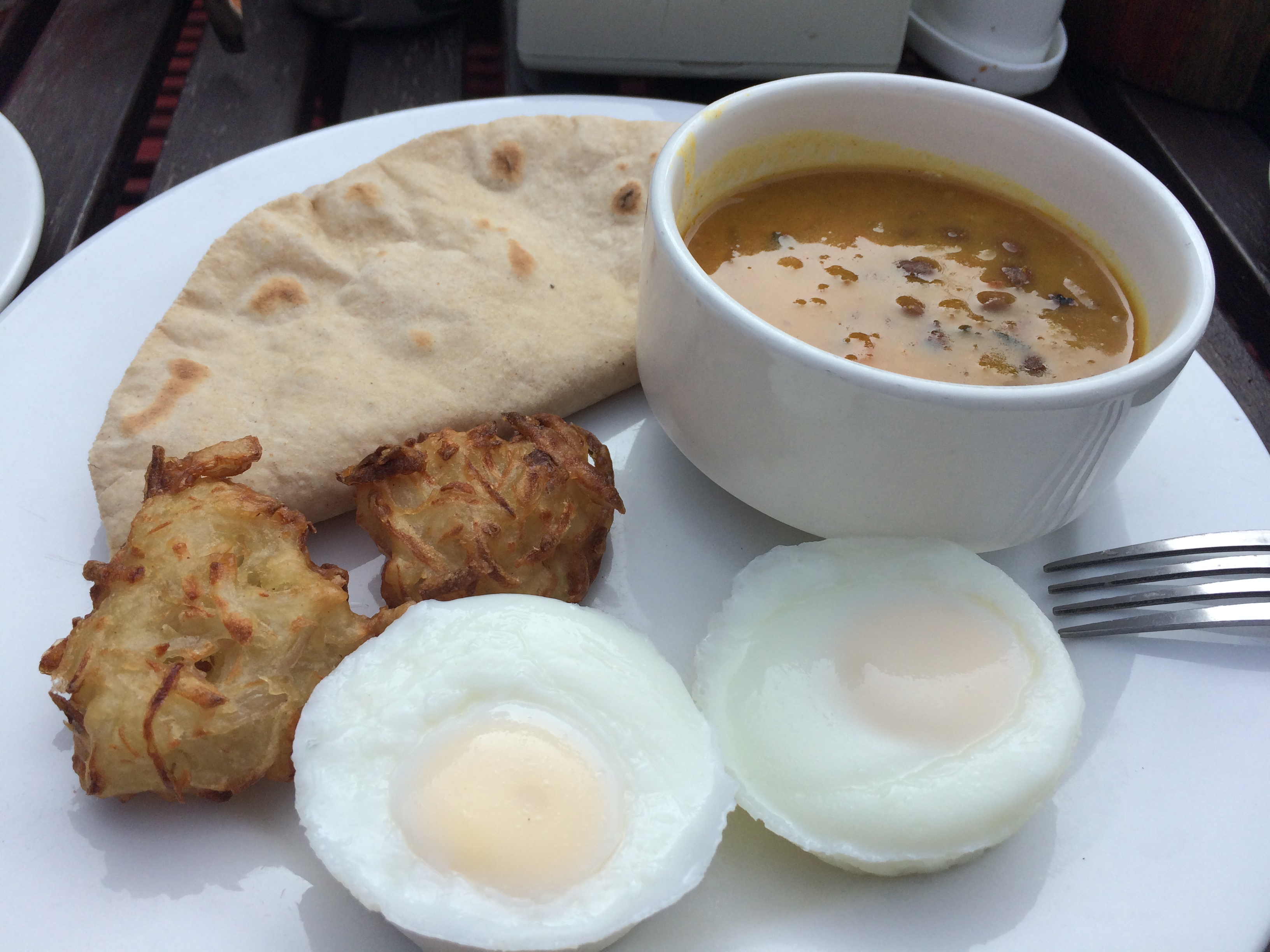
  • 8:45 – Dhal Bat lunch
  • 9:00 – Chiya/newspaper until the staff meeting
  • 10:00 – Work, work, work
  • 12:00 – Chiya Break
  • 1:00 – Snack Break
  • 3:00 – Chiya Break
  • 4:30 – Help children with HW
  • 6:00 – Dance Class
  • 7:30 – Dinner with my WPC Family
  • 8:00 – Practicing Nepali with the children
  • 8:30 – Back home, reading, and getting ready for bed

The blazing heat forces slowness during the day and as a result a network of early raisers. Each morning I and many predominately male Nepali’s awake and rush to the streets for a morning walk. At first, being the sole jogger causes endless stares, questions, and confused expressions. However after about a week I noticed an uptake in people’s pace, a few fellow joggers, and even a handful of solo lady walkers! Yesterday, one lady even started to join me in broken English stating “I’m running!”. Whether she knew it after our short stretch together or not, it totally made my day.

Women play an important role in Nepalese society from what I have observed today. Professionally most families rely on the income from both parents to feed and educate their families. Common shops [pasels] constructed out of a corner of a home [ghar] is typically operated by women [aimie] and men [manis] alike. You will also see many women selling homemade food [khana] on various street corners. Clothing [luga] plays such a large role in their society, an opportunity frequently utilized is to work independently as a seamstress for an additional source of income. Despite allowing women to work, they still operate under medieval expectations of women. For example, I missed a dance class one night and a friend asked me the following evening if I was too tied up in the kitchen [vanchha] to go. During most introductions, the 3rd question I receive is “are you married?” followed by utter confusion and clear concern when I say no [chhana]. There is also an expectations for women to be accompanied by a male once the sun goes down, which eliminates my freedom after 6 pm. Even typing this I am kindly reminded not to sit [basnu] outside for fear of “boys” [kaeta]. I feel grateful to experience these differences first hand, and also sweet relief that it won’t last forever.

And yes you heard me correctly – I joined a dance class. Despite preconceptions that I would become a yogi over the 6 months that I am here, I quickly learned that yoga is practiced solely amongst a particular Hindu sect if you are outside of the Kathmandu tourist district. Instead, dance is a huge part of modern culture. The safe home children are often singing a traditional Nepali song and begging me to record their latest dance moves. Music videos are playing in stores. Everywhere you go you hear a Nepali song playing from somewhere. The class I am in is similar to Zumba for the dancing newbies, backed by the latest local pop music and on a lucky day, Bey. *Confession* I like to show up early to watch the stellar dance moves in the advanced class and then secretly copy them in the privacy of my room later.

The team I work with is so spectacular it makes the day fly by. Most of the day is spent in discussion, over tea [chiya], or in the open office environment. The level of collaboration is necessary, especially when all work that is performed comes second to the 30+ children living in the home. Because of this, our daily meetings largely focus on the wellbeing of each child, followed by administrative updates. So far I have continued to spend a good percent of my time helping with technology related things as I mentioned before. Last week I helped them set up corporate email accounts to create a more professional means of communicating when email is deemed necessary. A few days ago I was able to demonstrate my PowerPoint skills (thank you WMP) and ability to develop planning materials for our awareness program implementation. Over the next couple of months, my focus will be to help develop content and participate in the deliverance of a program that advocates against human trafficking in schools throughout Makwanur.

When I arrived in Nepal, my expectation was that the population is fairly ignorant on the topic of trafficking, but instead I have found that this topic is discussed almost daily in the news and there are a wide array of NGO’s with missions aligning to WPC. Articles cast light on traffickers that have been caught and women rescued. There are a few governmental programs in place to help prevent such as strict border guards and free counseling sessions. The trouble is spreading the awareness of the issue and availability of services to the more remote villages who are without TV, radio and often newspapers.

One of the sources of trafficking resides in the fact there are simply not enough job opportunities in Nepal so it is very common for Nepalese people to apply for international positions through various organizations. Many of these organizations are honest, providing people with great opportunities to make more money for their families. The trouble is it opens the door for traffickers, or brokers, to easily mislead individuals (mostly women) looking for work and need help figuring out the application process. In order to work abroad you first need to apply for a visa and pay a fee. Like most systems in Nepal the paperwork is intensive and difficult to navigate, even when you go through an organization that helps with the process. That is why when offered an opportunity to speed up the visa process and a promise of an allotted amount (usually in USD), it is hard to turn the offer down. Yesterday the government expressed the need to crack down and investigate organizations that provide abroad job opportunities, but similarly to the constitution, it’s great to talk but let’s see it put in action. Our goal with the program is not to necessarily discourage working abroad, but rather provide knowledge to the risks that are involved and tools to do so properly. Last week our team got energized [shakti] about different fundraising opportunities and ways to spread awareness throughout our community, so look forward to hearing more about that in the near term.

That’s all she wrote folks. Enjoy your Sunday.
Let’s Talk About Politics

Let’s Talk About Politics

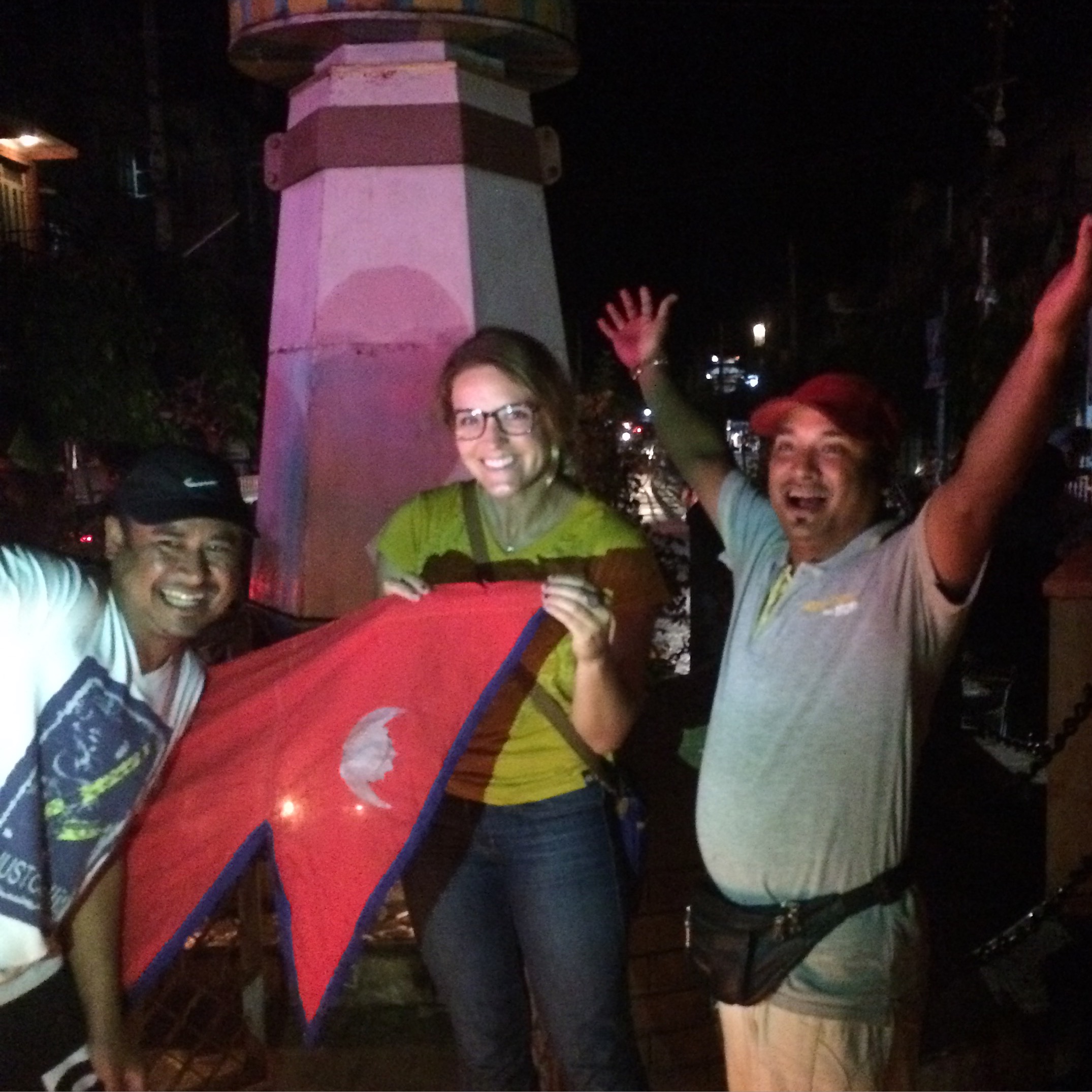
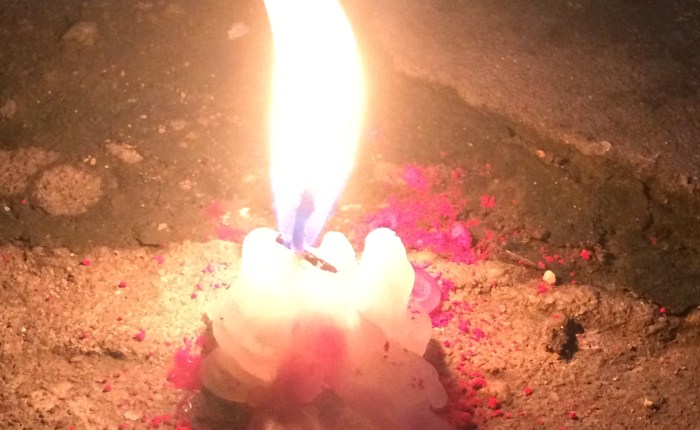
Lightly covered in the US news, Nepal experienced a monumental moment in their history yesterday. After many years of development and revisions, Nepal has finalized a constitution, the first one in place since discussions began in 2006. The majority of Nepal is in support of the new legislature and welcome the change. The streets were filled with people singing, dancing, and lighting candles to demonstrate their support.

20150920_141047071_iOS.        20150920_142718060_iOS

To accompany this event, I’ve provided a quick history lesson (hopefully depicted accurately) cultivated through conversations, local news and online research:

In the mid 90’s, a rebel group known as the Maoist formed in the jungle of Nepal and was slowly gaining followers through force and aggression. This group is considered a communist organization and was feared throughout Nepal. I was told a story where the Maoist would come into a remote village and basically tell residents that they had to convert to Maoist or die. As the Maoist gained power, they slowly infiltrated the political parties and initiated a 10 year civil war.

On June 1st, 2001, Nepal experienced a national tragedy. Price Dipendra murdered his entire royal family, in an event called The Nepalese Royal Massacre. Although this event was documented as a family dispute, many locals and undocumented opinions will share this the Maoist group was behind this event. For the next 5 years, Nepal was ruled by the kings remaining brother, Gayendra, who made a political mess of things. During this time the parliament was dissolved, claiming they were incapable of handling the Maoist rebels. As a result, 3 different political parties formed with hopes of establishing power for the people, eliminating the martial law currently in place. This included the Maoist, Communist Party of Nepal, and the Nepali Congress. In 2008 the three parties successfully abolished the monarchy and established a federal republic, led by a president and prime minister.

The frequent governmental upheavals has left the country govern-less, individually abiding by the rules of their diverse religions rather than a centralized government. The is a saying that goes “this is Nepal, I do whatever I like”. The political leaders and Brahmin caste have complete control of judicial decisions, leaving the people with little to no control of their judicial fate.

This brings us back to the constitution.

So since 2006, the three political parties have been working side by side to come up with an agreement that provides power to the people and moves towards a federation and democratic governmental rule. Despite some hesitations that I will get to next, the agreement that is now in affect includes numerous progressive steps in the right direction, and as the current (now retired) president explains, can be amended with 2/3’s majority rule. With a constitution in place, simple legislature that we take for granted, are now defined, like terms of citizenship and core freedoms. It also defines governmental structure and processes.

The major change is the creation of 7 states, separating Nepal into geographic regions with providence specific governmental power. In addition, the constitution stresses inclusion despite diversity, and provides the following freedom of opinion and expression, of assembly peacefully and without arms, to form political parties, unions, and associations, to move freely amongst Nepal, and to partake in any organization. It also defines citizenship, provides women equal parental rights, the right for a lawyer, outlaws torture and detention, etc. etc. etc. There are also a few articles included related to my mission in Nepal:

  • Article 34. Rights against exploitation:
    • (1) Each person shall have the right against exploitation.
    • (2) No person shall be subjected to any kind of exploitation on the basis of religion, custom, tradition, culture, practices or any other bases.
    • (3) No person shall be subjected to human trafficking or bonded labour, and such an act shall be punishable by law.
    • (4) No person shall be subjected to forced labour. Provided that nothing in this sub-clause shall prevent the enactment of a law requiring citizens to be engaged in compulsory service for public purposes.
    • (5) Any act contrary to sub-clause (3) and (4) shall be punishable by law and the victim of such an act shall have the right to appropriate compensation from the perpetrator.
  • Article 36. Rights regarding education:
    • (1) Every citizen shall have the right to access to basic education.
    • (2) Each citizen shall have the right to compulsory and free basic education, and free education up to the secondary level.
    • (3) The physically impaired and citizens who are economically very poor shall have the right to free higher education as provided for in law.
    • (4) The visually impaired shall have the right to free education with the medium of brail script. Citizens with hearing impairment and speech impairment shall have the right to free education with the use of sign language.
    • (5) Every Nepali community living in Nepal shall have the right to acquire education in its mother tongue up to the secondary level, and the right to open and run schools and educational institutions as provided for by law.
  • 43. Right of women:
    • (1) Every woman shall have equal right to lineage without any gender discriminations.
    • (2) Each woman shall have the right to safe motherhood and reproductive health, and infanticide on the basis of identity of gender shall be punishable by law.
    • (3) There shall not be any physical, mental, sexual or psychological or any other kind of violence against women, or any kind of oppression based on religious, social and cultural tradition, and other practices. Such an act shall be punishable by law and the victim shall have the right to be compensation as provided for in law.
    • (4) Women shall have the right to access participate in all state structures and bodies on the basis of the principle of proportional inclusion.
    • (5) Women shall have the right to special opportunity in the spheres of education, health, employment and social security on the basis of positive discrimination.
    • (6) Both the spouses shall have equal rights in property and family affairs
  • 44. Rights of children:
    • (1) Each child shall have the right to his/her identity with the family name, and birth registration.
    • (2) Every child shall have the right to education, health care nurturing, appropriate upbringing, sports, recreation and personality development from family and the State.
    • (3) Every child shall have the right to formative child development, and child participation.
    • (4) No child shall be employed in factories, mines, or in any other hazardous works.
    • (5) No child shall be subjected to child marriage, illegal trafficking, kidnapping, or being held hostage.
    • (6) No child shall be subjected to recruitment or any kind of use in the army, police or armed groups, neglected, or used immorally, or abused physically, mentally, or sexually, or exploited through any other means, in the name of religious or cultural practices.
    • (7) No child shall be subjected to physical, mental, or any other forms of torture at home, in school, or in any other places or situations.
    • (8) Every child shall have the right to child friendly justice.
    • (9) Children who are helpless, orphaned, physically impaired, victims of conflict and vulnerable, shall have the right to special protection and facilities from the State.
    • (10) Any act contrary to Clause (4), (5), (6) and (7) shall be punishable by law, and children who have suffered from such an act shall have the right to be compensated by the perpetrator as provided for in law.

I have observed that the US news has mostly focused on the negative aspects of the constitution. Yes, there are certain minority groups that are very much against the constitution and do not feel that they are adequately represented, particularly when it comes to the electoral college representation of the more remote states. There is also a general concern that there is no clear implementation plan and are unsure what next steps will be taken to execute changes like expanding free education. Personally, I feel that this was a step towards resolving one of Nepal’s primary issues, lack of political definition. With the new constitution in place, men, women, and children of all castes, ethnicities, sexual orientation, and religion are protected alike, providing ground rules that are ready for future expansion.

Over the next month, political elections will occur. In the new government, the previous president and prime minister will step down, making space for The Federal Democratic Republic of Nepal to start fresh. The president will be elected to a 5 year term by the voting members of the federal parliament. Unlike the US, only members can vote. Speculation has guessed that the leader of the Maoist party, Pushpa Kamal Dahal will be elected, granting him control of the Nepali army. Despite the Maoist violent history, hope remains that the future constitution will lead Nepal towards equality amongst its diverse nation.

One of the things I have enjoyed so far is having time to read the morning Himalayan Times, delivered directly to the safe home with my morning Chiya. This topic has been heavily covered and I’m sure will remain front page news has reactions to the recent formalization and implementation of the constitution. Looking forward to what happens next…20150921_025438168_iOS


Hetauda, I’ve Arrived

Last Sunday we traveled from Kathmandu to Hetauda, where I will be living for the remainder of my time Nepal. Upon arriving at the safe home I was greeted with a warm welcome. The Safe Home family was eagerly awaiting on the steps with a prayer scarf in hand. Quickly I met the house parents, administrative team, and Dipa, the co-founder of WPC Nepal. I was overtaken by their joy and energy. After introductions and chiya (tea), a few of the older girls took me to our apartment to get settled.

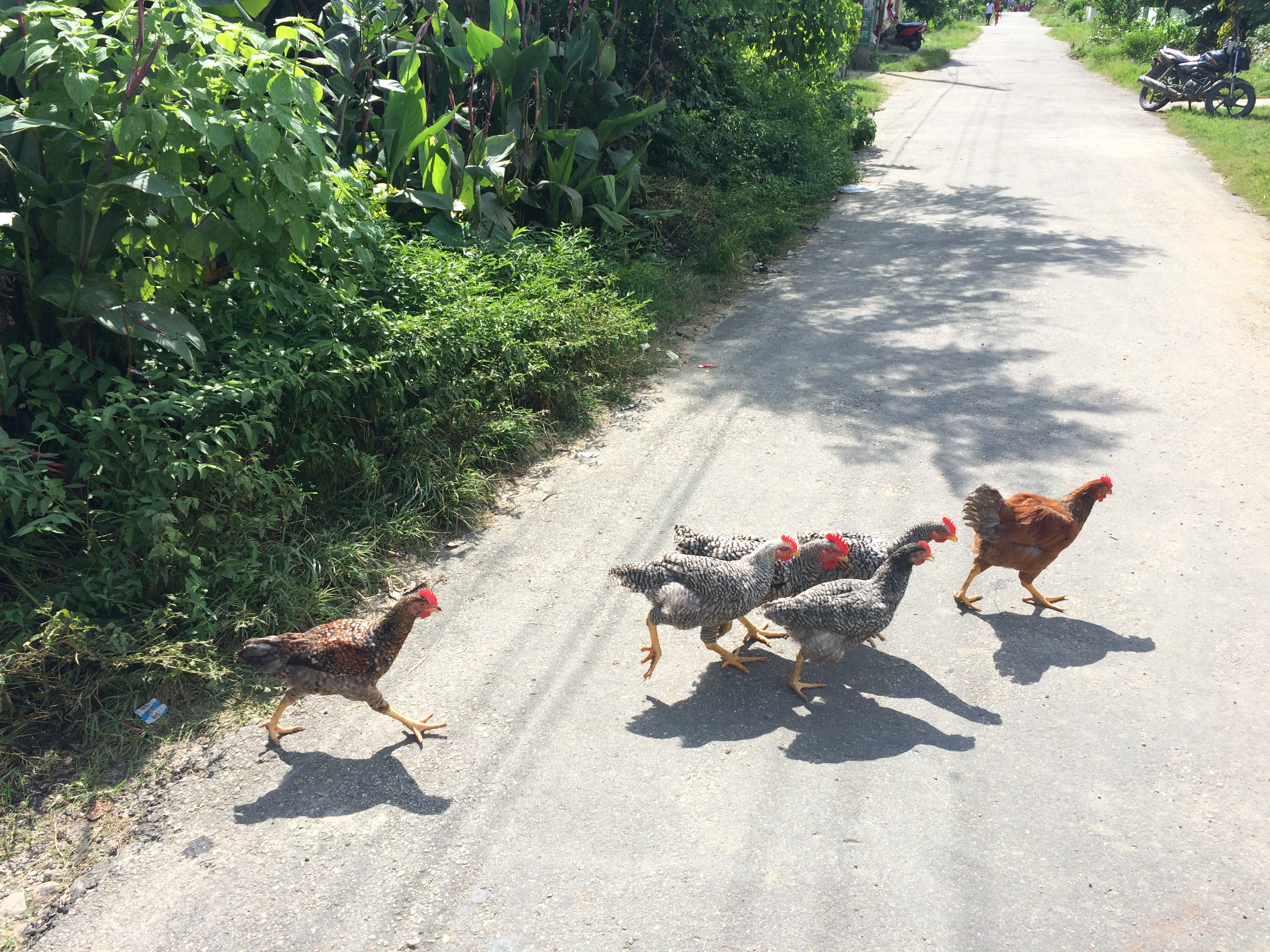
When we walked up to this home pictured below, I thought they had to be teasing me, this place is a mansion! The homes in Hetauda are constructed so elaborately on the outside, built three to four floors strong with cement and wrought iron windows. They typically have columns, vegetable gardens, a puja for prayer, and roof top decks with chickens and goats running freely out front. Each one is so unique. Different from Kathmandu, there is room to garden and enjoy the outdoors. Inside the “apartment” contains the bare necessities – twin beds with thin mattresses, modest kitchen, a few bedrooms, and a tiled squat toilet.

20150917_002320825_iOS   20150916_083911343_iOS

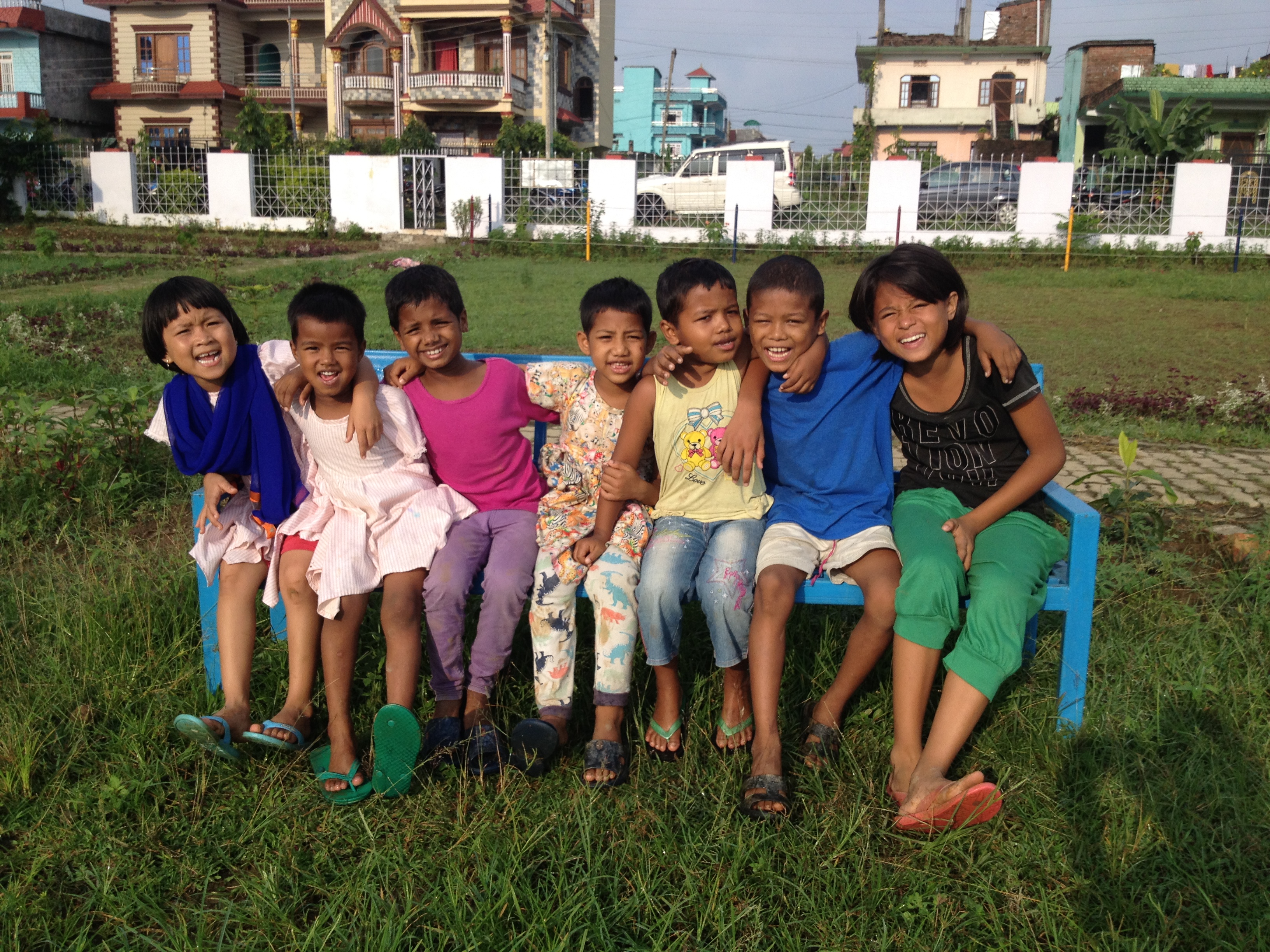
After unpacking and wiping the sweat off my back, I made my way back over to the house to greet the children who had arrived home from school. Within minutes of returning I was helping with homework (i.e. re-teaching myself long division and mathematic story problem solving). Thank goodness Mr. Clark used to make me stay late in 4th grade to practice such topics! The younger children surprised me with their ability to speak English. I was peppered with all kinds of questions – “Where are you from?” Seattle. “Do you like speaking?” Sometimes. “Do you love Nepal?” Oh yea.

IMG_1407 (2)

The first couple days I have spent up the laptops, providing basic training on new technology that I was able to provide with your generous donations. A big thank you to all of those who monetarily supported us! After sharing my love for One Note and box.com, I handed over the reins to Pratikala and Ram to start using their new systems.

20150914_094417757_iOS

The children have the week off of school, so today we took a break to take the kids to walk through the Hindu Teej festival, celebrating women, and to play in the park. At the festival, all the Hindi women dress in fancy red and green sari’s and fast and dance to bless their husbands or future husbands. Every women was immaculately dressed with their hair pinned and makeup painted on their faces and glitter brushed down their backs. The streets were filled with such vibrant colors. The WPC kids, dressed in the street clothes, stood out as foreigners, almost as much as I did being the only white person I’ve seen for days.

20150916_083041349_iOS

Despite the fast, we were able to find a vendor selling ice cream providing the perfect afternoon treat on a hot jungle-esque day. When offered ice cream from the vendor 11-year-old Yug Maya quickly replied in perfect English “If you can give me for free I will gladly help you eat, otherwise I have no money for you.” She’s so witty.

One afternoon I bonded with the older girls and boys through hand stands and kart wheels. There are a couple of acrobats at home! A few have since been able to master a head stand and we plan to tackle side crow next.

20150916_085643702_iOS    20150916_085748951_iOS

One thing that I have grown to appreciate the past few days is the spontaneity that is allowed with a relatively unplanned schedule. Every day since I have been here an exciting event has occurred out of the blue – something that would cause havoc to ones schedule in the states. On Monday we were told that we had to participate in a Children’s Day rally the next morning. Wednesday we had a surprise visit from Ram, the Chief District Officer of Makwanpur District (similar to our mayor). Tomorrow we shall see what happens…

The Sightseeing Begins

The Sightseeing Begins

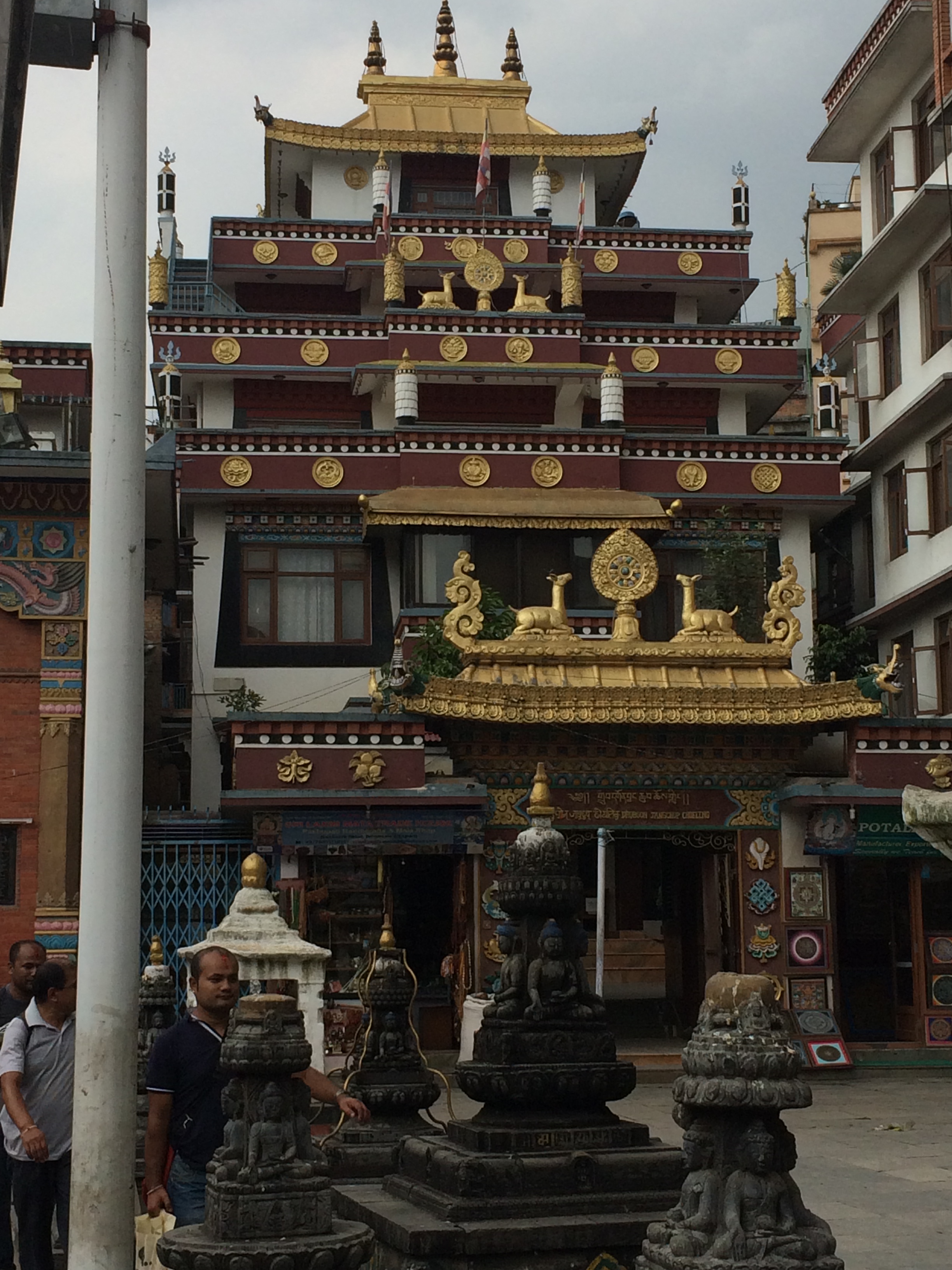
So much to see! Kathmandu is a rather expansive city designed with twisting streets and interconnecting alleyways filled with shops, mo mo’s and dal pancakes, and bustling people dressed in ethnic garb. Every corner you turn there are giant temples or what they call Stupas, filled with people of worship and tourists alike.

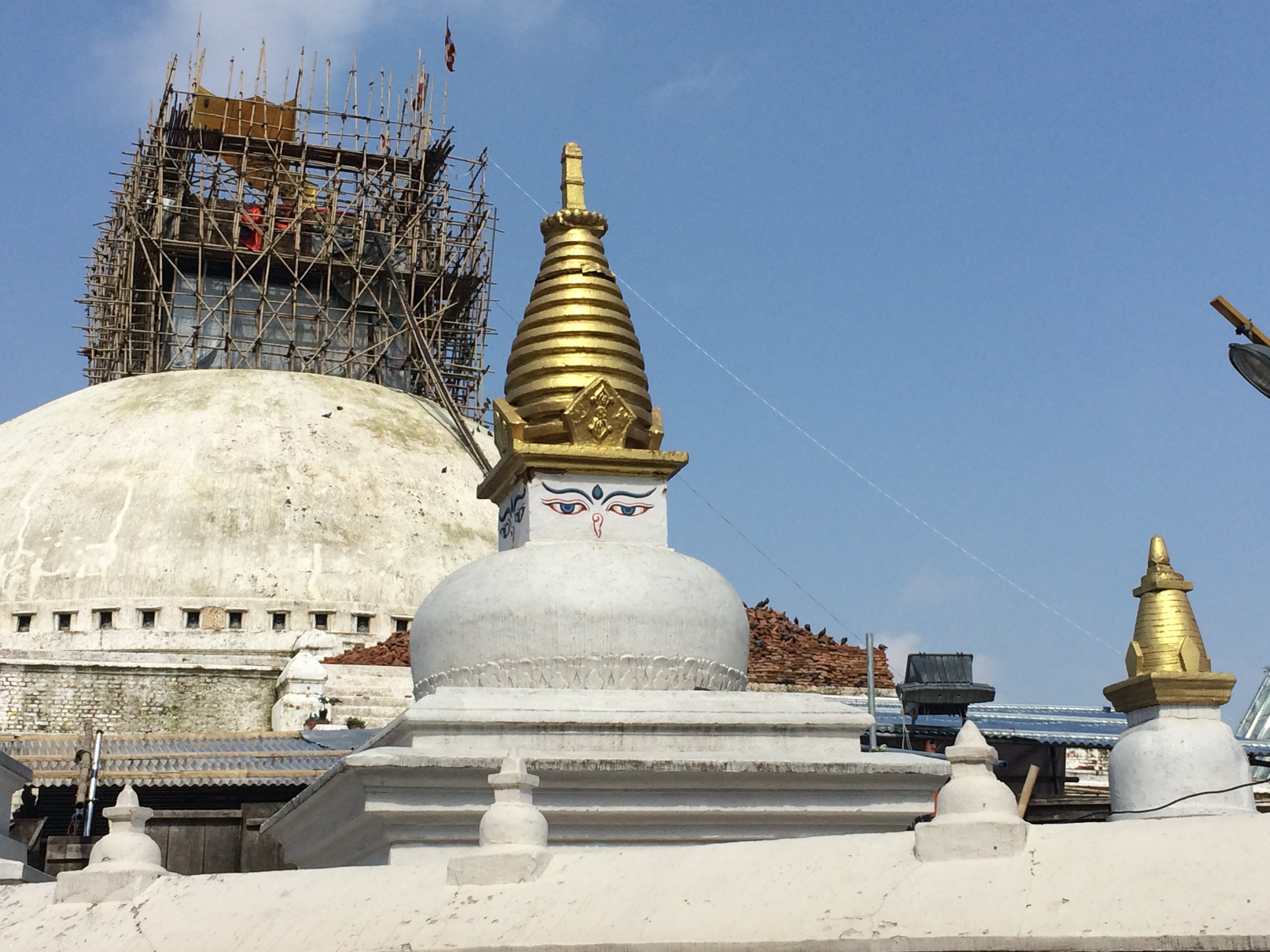
Today I toured around Thamel and neighboring Stupas with Ganga from WPC Nepal. Her ability to navigate the city paired with frequent stops for directions was impressive! My head was spinning leaving me directionless, so I was very thankful for my guide. We started with a bus ride to Shree Boudhanath, a temple for wish granting. Upon entry at most of the world heritage sites, foreigners typically have to pay a fee, somewhere around $15USD per site to enter, I presume will help fund post-earthquake construction.

IMG_5016

I found an image online that depicts the symbolism behind each layer of the temple rather well. Read more here.

Boudhanath-Stupa-copy

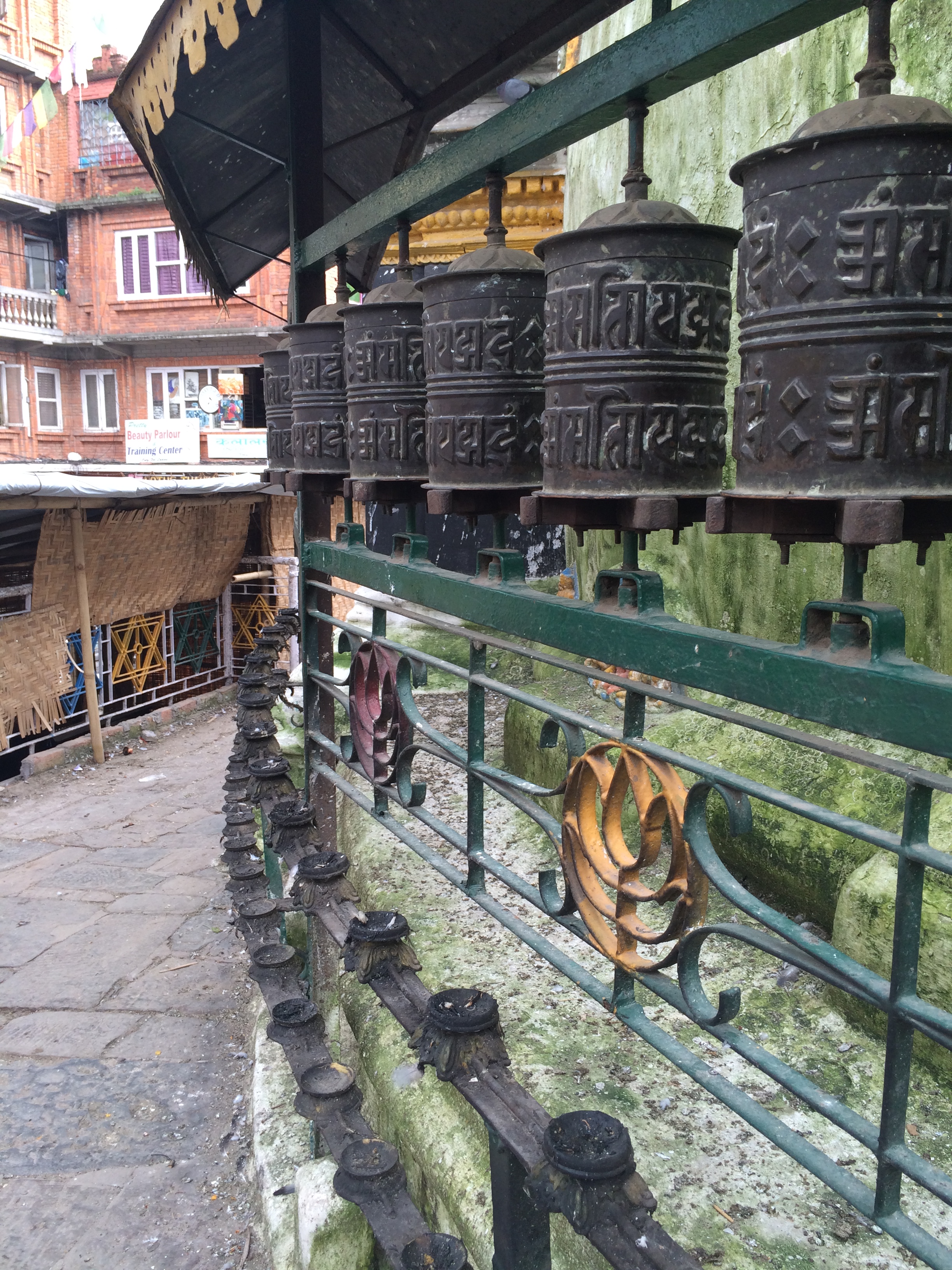
Here we fed the pigeons as an act of daily offering, spun the prayer wheels and marveled at the numerous Hindu statues before carrying on to the next location, Pashupatinath Temple.

IMG_5009

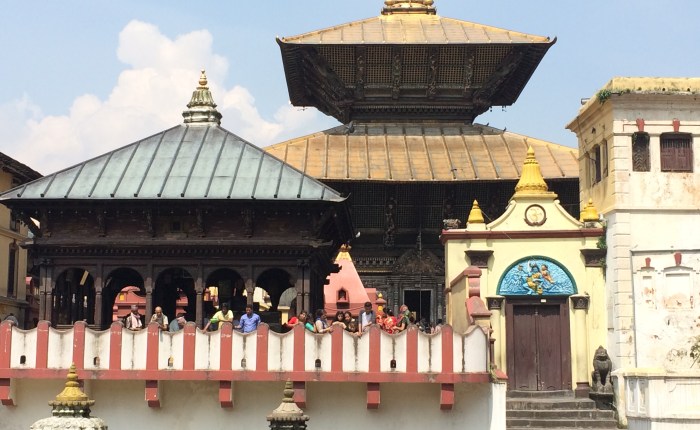
Pashupatinath is one of the few temples that actually restricts non-Hindu visitors. This is the cremation site for all Hindu in the Kathmandu Valley. Bodies are cremated on large squares right on the Bagmati River. Once the ceremony is complete, the ash is swept away into the river initiating the reincarnation process. About 10 yards downstream children are playing a game remarkably resembling Marco Polo. It is also the primary drinking water source for the valley… Bottled water for me, thanks!

IMG_5033

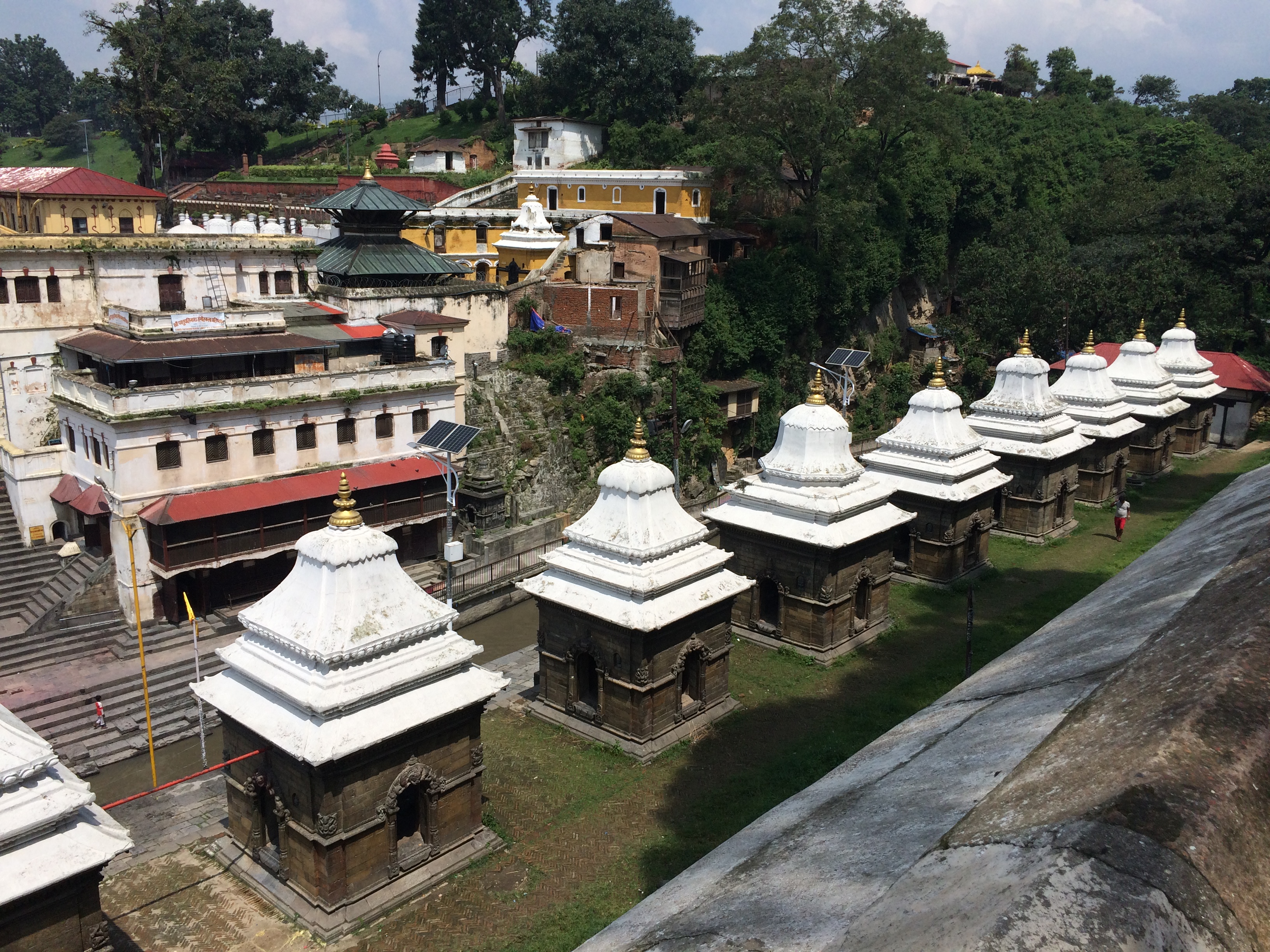
At this site there is also a line of temples worshiping the God of fertility. Men and Women alike placed themselves in these stone structures praying for themselves, family members, or spouses fertility.

IMG_5043       IMG_5037_edited

Monkeys, dogs, and the occasional cat have taken up residence on the grounds of the temples along with the monks who have dedicated their lives to serving their gods.

At the far end of the site there was a temple dedicated to the 5 elements in Eastern IMG_5052culture; fire, wind, water, earth, and sky. This was a home to the elderly or cripple who did not have a family to care for them where they could pray to the elements to bring them towards enlightenment.
Next we moved back toward Thamel and explored the Durbar Square. This is perhaps one of the most famous sites and was sadly heavily impacted by the earthquake leaving much of the structures inaccessible or non-existent. Near the entrance is one of the largest boarding schools in Kathmandu, which has now been temporarily replaced with tent structures housing more students than desk space available. We watched two rebel youngsters sneak out the back to play outside. I’d probably do the same.

Different from most temples I’ve seen thus far, Gaddi Baitak is a neoclassic palace built by Rana Prime Minister Chandra Shamsher. It had white columns and blue detailing, making it look like it belonged in Greece.

IMG_5069

A spectacular column that had once been standing in the very center called King Pratap Malla’s Column had now fallen:

We walked through a few shops on the way back home and stumbled upon another site, hidden from plain view called Kathsimbhu’s Temple. School children ran around the temple, celebrating life during recess. There were relics on the temple’s outer walls that we assume were originals as they were guarded behind numerous locks and layers of protection.

IMG_5080       IMG_5075

Here we spoke with a 7 year art student training to be a master mandala painter. He explained that there are four types of mandala’s; Mantra (108 words repeating during worship), Buddha, Dali Lama (elements along the outside rim leading to enlightenment in the center), and the last one has escaped my memory. Each is used as the focus during meditation. Each Mandala is painted by three separate individuals at varying stages of their profession. The student has the largest brush, only allowing him to provide so much detail. As you work towards master, the brush gets smaller until finally it is only a single hair. The master is responsible for painting the final details, usually with 24K gold. A single 8″x8″ painting can take anywhere from 2 to 4 weeks to finish. Talk about patience. I like my paintings to take about 2 to 4 hours.

I’m currently sitting in the guest house watching the rain. I’ll have to follow up with a post on the food – three meals in and I’m in love.

IMG_4999

Departing Remarks

I can’t believe the time finally came. Last weekend my sister came to help me pack up my belongings and run last minute errands before my trip. This included a full day bonanza and new Costco to find contacts after forgetting to pick mine up before the Dr. closed Friday… Oops.

When flying from Seattle to Dubai you apparently travel north, like over the north pole north. A friend informed me of this prior to departure so I spent the flight eagerly pacing the aisles until the time came where I was directly over the pole. Sadly all I could see was clouds. Until next time Mr. Claus.

Before leaving I printed off a bunch of pictures of my family, friends, and summer memories. How blessed did I feel seeing the number of wonderful people supporting me and experiencing life with me. It’s been a good summer Seattle – already excited for the next one and the next list of mountains to tackle.

Looking forward I feel at ease, excited about what the next 6 months will bring; the people, the culture, the change. As I’ve been warned by many, I’m keeping my expectations low and my eagerness to learn high. So whatever happens next will all be in the name of growth.

A friend gave me a departing gift of a Marie Claire magazine to read on the plane. After pouring over high fashion advertisements and hilariously uninspiring quotes by Miley Cyrus (although her IG is worthy of a jaw dropping browse) I came upon an article in the back exploiting a mining town in the North Dakota for its overly abundant population of trafficked women. The women’s highlighted beginnings were all different, but the message was clear. The United States is not victim-less. This article was part of a series they will be publishing if you feel inspired to learn more.

When I get to Katmandu I will be staying at a guest house for a few days in Thamel, the center of it all, which was sadly heavily impacted by the earthquake. My place it directly across from the Garden of Dreams. Sounds like a good place for a quiet meditation and read doesn’t it? If not, there is a yoga studio nearby so that will suffice. Ganga, the Program Manager of WPC Nepal, will be meeting me to go explore Katmandu and make a few Kurtas’ for my trip. Tunics and Aladdin Pants. Bring it on.